
By Naomi Riess | Guest Commentary, Rocky Mountain Voice
We have all heard the saying: A fed bear is a dead bear.
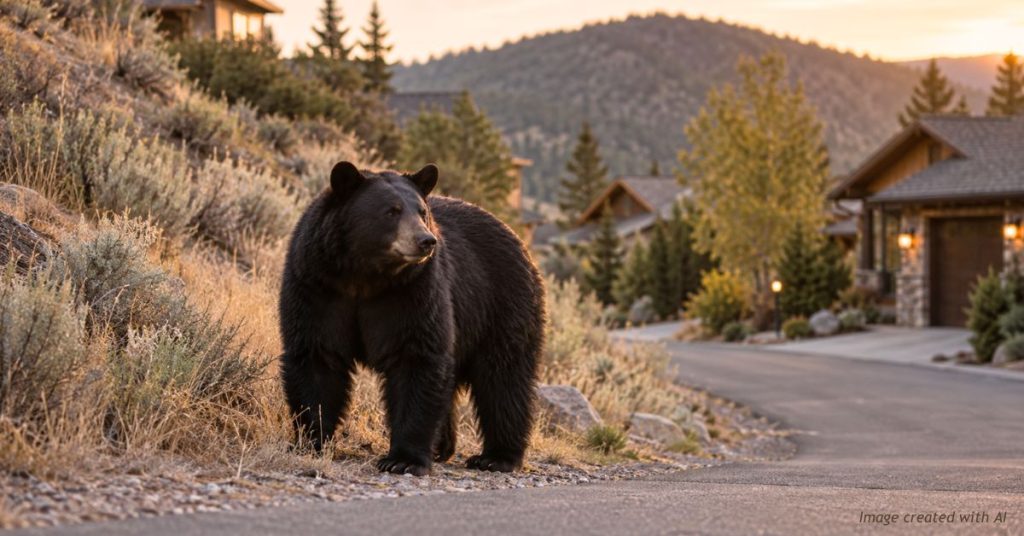
This year, Colorado is seeing what happens when nature runs short of food. In Southwest Colorado, drought and a late-spring freeze have severely reduced natural bear foods. Statewide, CPW has reported 8,672 bear-related sightings and incidents through August, 3.6 times the five-year average. Relocations are running 3.5 times the average and euthanizations 2.7 times the average.
A Durango bear was recently euthanized after being found in poor condition. A necropsy found its stomach and upper intestine completely blocked with trash. The bear was essentially starving to death.
We need to keep people from attracting bears. CPW worked with our local representative and other legislators on HB26-1342 to strengthen enforcement against people who knowingly leave food or edible waste where there is a reasonable probability of luring a bear. The law eliminates mandatory first-offense warnings and increases the fine for a third or subsequent offense from $2,000 to $5,000.
That is an important tool. But it addresses only one side of the problem: human behavior.
What about wildlife management?
Colorado’s bear population today is substantially different from what it was when voters approved Amendment 10, prohibiting spring bear hunting, in 1992. At that time, Colorado’s black bear population was estimated at between 8,000 and 12,000 bears. Today, CPW estimates the population at approximately 17,000 to 20,000.
While these are population estimates rather than an exact statewide count, they show substantial growth over the past three decades. In 2011, then-Rep. J. Paul Brown introduced legislation to restore the state’s authority to allow a spring bear hunt. It did not become law. More than thirty years after Amendment 10, both Colorado’s bear population and the conditions in which bears and people interact have changed considerably.
Southwest Colorado has changed dramatically as well. The population of the four counties that make up House District 59 has grown by roughly 77% since 1990. More people are living, working and recreating in bear country, while development and human activity continue to expand.
We have more bears. We have more people. We have more interaction between the two. And this year, we have an extraordinary failure of natural food sources.
When circumstances change this dramatically, shouldn’t we be willing to reevaluate our management strategies? Shouldn’t we be asking what other tools should be considered as conditions change?
This is not about simply increasing the spring harvest of boars. It is about examining the full range of science-based management tools, including population levels, reproduction, habitat and food availability, human attractants, hunting seasons and harvest levels. CPW already uses this approach. But its professionals must have the tools, resources and respect to continue evaluating all reasonable options.
Commissioners have an important role in setting policy, but they are not a substitute for the professional expertise of CPW’s wildlife biologists and scientists. Evidence, expert analysis and measurable results should carry more weight than ideology or predetermined conclusions. The Commission should ensure that CPW’s professional staff have the resources and authority to consider reasonable alternatives, not simply reject one approach without examining what else might work.
The goal should be to reduce the number of bears that become problem bears and, ultimately, reduce the suffering and cruelty that can result when bears become habituated to human food and must be relocated or euthanized.
We should continue securing trash. We should enforce HB26-1342. We should protect people and property. But we should also give CPW biologists and scientists the authority, resources and confidence to determine whether our current population-management strategies are working and whether changes are warranted.
Colorado’s landscape has changed. Our bear population has changed. Our communities have changed. Perhaps our wildlife-management conversation needs to change with it.
Naomi Riess is the Republican candidate for Colorado House District 59. A Southwest Colorado land-use consultant and small-business owner with more than three decades of experience, she has worked with property owners, farmers, ranchers, businesses and local governments on land use, water and development issues while serving in a variety of community leadership roles.
Editor’s note: Opinions expressed in commentary pieces are those of the author and do not necessarily reflect the opinions of the management of the Rocky Mountain Voice, but even so we support the constitutional right of the author to express those opinions.