Rocky Mountain Voice

Tag: Bureau of Reclamation

Western Water Crisis Deepens as Key Colorado River Decisions Loom
The Fence Post, Approved, State

Western Water Crisis Deepens as Key Colorado River Decisions Loom

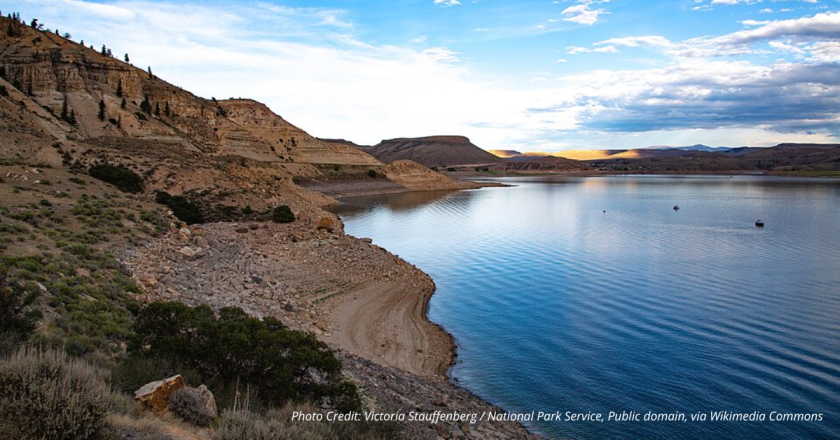
By Ali Longwell | The Fence Post Western Slope elected officials, water managers, engineers and conservationists met in Grand Junction on Friday, Oct. 3, all focused on one thing: the uncertain future of the Colorado River. “Water users, as a lot, tend to crave certainty, and that certainty seems more and more elusive these days,” said Peter Fleming, general counsel for the Colorado River District, at this year’s annual seminar hosted by the River District. Andy Mueller, the River District’s general manager, said the Colorado River Basin was “at a crossroads.” While the seminar broached many of the challenges and opportunities facing those who rely on the Colorado River, most discussions came back to two looming decisions that will dictate how the future looks for the 40 millio...
Feds Need Different Approach to Colorado River
GregWalcher.com, Approved, Commentary, State

Feds Need Different Approach to Colorado River

By Greg Walcher | Commentary, GregWalcher.com This month’s withdrawal of President Trump’s nominee to head the Bureau of Reclamation (BOR) provides an opportunity, not just for a new nominee but for a new approach to the whole Colorado River management mess. It is an opportunity the White House and Interior Secretary Doug Burgum should take very seriously. The nominee’s withdrawal, due to the skepticism of Upper Basin senators, highlighted the deteriorating relationship between BOR and the states. In fact, BOR under Trump has thus far taken essentially the same tack as under Presidents Obama and Biden, namely threatening the states – including those in the Upper Basin – with a federal takeover if they don’t produce an “acceptable” plan to reduce their use of water. As negotiations...
The push to redefine beneficial use ignores 100 years of western water law
GregWalcher.com, Approved, Commentary, State

The push to redefine beneficial use ignores 100 years of western water law

By Greg Walcher | Commentary, GregWalcher.com Last week when some marauding teens bashed a mailbox with a bat, angry neighbors posted on nextdoor.com, “there needs to be a law against that.” Is that just an impulse reaction, or do they really not know there is a law against that. Since 1909, it has been a federal offense to tamper with, vandalize, deface, or destroy mailboxes, under penalty of three years in prison and a $250,000 fine. People often think things ought to be illegal that already are, that we should regulate things we already do, even that things ought to be defined that already are. I couldn’t help wondering how serious recent headlines were, announcing that several environmental industry groups had petitioned the Bureau of Reclamation to stop allowing water to be wast...
Colorado Delegation Unites to Demand $140M Water Funds Release
State, Approved, The Colorado Sun

Colorado Delegation Unites to Demand $140M Water Funds Release

By Shannon Mullane | The Colorado Sun The state’s congressional delegation sent a bipartisan letter to federal agencies, calling on them to fund Colorado River drought-response projects. Colorado’s entire congressional delegation, Republicans and Democrats alike, is calling for the release of $140 million in frozen funds for Colorado River water projects. In January, the last days of the Biden administration, the Bureau of Reclamation awarded funding for 17 projects as part of the federal drought-response effort in the overstressed Colorado River Basin. Three days later, President Donald Trump issued sweeping executive orders that aimed to reshape federal spending priorities to match his administration’s policies. The Colorado projects were caught in the maelstrom. Co...
Southern Ute Tribe taps Animas–La Plata water rights after 60 years of roadblocks
The Colorado Sun, Approved, State

Southern Ute Tribe taps Animas–La Plata water rights after 60 years of roadblocks

By Shannon Mullane | Colorado Sun For years, two tribes have pointed to the barely used, multimillion-dollar project near Durango to show tribal water access challenges in the Colorado River Basin This summer, the Southern Ute Indian Tribe rolled out miles of temporary rubber water lines. The above-ground tubes had one job: carrying water to oil and gas operations on the reservation. But the pipelines also represent something else: a historic moment in a drawn-out, arduous debate over water in southwestern Colorado. In May, the Southern Ute Indian Tribe tapped into its water in the controversial Animas-La Plata Project, the first time a tribe has used its water from the project since it was authorized in 1968. The Animas-La Plata Project has come to encapsulate long-held dre...
Colorado River Basin states inch toward fragile water compromise as federal deadlines approach
The Colorado Sun, Approved, National

Colorado River Basin states inch toward fragile water compromise as federal deadlines approach

By Shannon Mullane | Colorado Sun The federal government laid out firm deadlines for the process to decide how to manage the river’s future. As the negotiations continue, environmental conditions in the basin worsen. Colorado River Basin states are almost, sort of, close to a small compromise in their negotiations that focuses on matching reservoir releases more closely to the river’s actual flow. Colorado water watchers seem to be rolling with it — so far.  Top negotiators in Colorado and six basin states offered a glimpse into the high-stakes talks for the first time in months during several water meetings this week. The states are negotiating how to manage the future water supply for 40 million people once the existing rules expire in 2026.  The opposing sides in the ne...
Walcher: The “sky is falling” water narrative doesn’t hold water
Approved, GregWalcher.com, National, State

Walcher: The “sky is falling” water narrative doesn’t hold water

By Greg Walcher | Commentary, GregWalcher.com Every year for the past 25, at least, negotiating teams for the seven states on the Colorado River have worked to overcome a new crisis, invariably driven by two entities: the State of California and the federal Bureau of Reclamation (BOR). For a quarter-century, those teams have responded to federal pressure based on the dubious theory that an ongoing drought, and a resulting decline in the river’s flow, somehow changed the law and gave BOR authority to ignore the Interstate Compact. Not once has the federal agency ever acknowledged the government’s own role in reducing the river’s flow, by neglecting to manage thirsty invasive species like tamarisk, and especially by allowing national forests to become so overgrown that much of...