Rocky Mountain Voice

Tag: Business Climate

Lawmakers Attempt End Run Around TABOR With New Tax Bills
Complete Colorado, Approved, Commentary, State

Lawmakers Attempt End Run Around TABOR With New Tax Bills

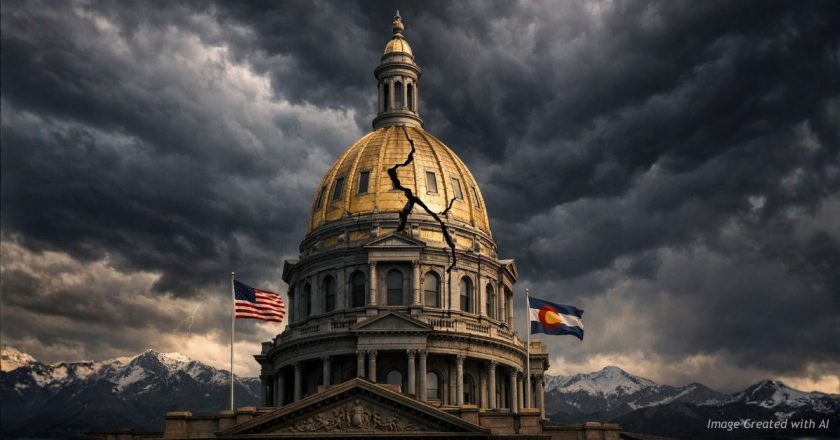
By: Mike Rosen | Complete Colorado The governor and progressive Democrats that dominate the state legislature and every statewide office in Colorado have been masterful ― if not ethical and honest ― in devising devious schemes to circumvent the TABOR amendment in the Colorado Constitution.  That’s the Taxpayer’s Bill of Rights, passed by a 1992 voter-initiated ballot measure that bypassed the legislature. It limited government spending and barred the legislature from increasing taxes or imposing new ones without the consent of the voters. Democrats have always despised TABOR. Their favorite ploys have included misrepresenting taxes as “fees” and funding spending programs through tax credits. Because those credits reduce government revenues, they’re the equivalent of...
Colorado Joins Other Blue States On California’s Risky Fiscal Road
New York Post, Approved, Commentary, National

Colorado Joins Other Blue States On California’s Risky Fiscal Road

By John Mac Ghlionn | Commentary, New York Post Colorado used to be the West’s answer to California — all the mountains, none of the madness. Pro-growth, lightly regulated, and magnetically attractive to the kind of ambitious people California was slowly driving out. That equilibrium is gone. The strivers arrived from the Golden State, shifted the politics leftward, and brought the policy preferences that made them leave in the first place. The results are arriving on schedule. Population growth has slowed. The labor force has contracted. Denver now trails Midwestern peers in economic momentum. Housing costs have climbed to coastal absurdity, with typical homes demanding more than six times median income. READ THE FULL ARTICLE AT NEW YORK POST...
Colorado’s Political and Regulatory Climate Faces Questions as Major Firms Relocate
The Denver Gazette, Approved, Commentary, State

Colorado’s Political and Regulatory Climate Faces Questions as Major Firms Relocate

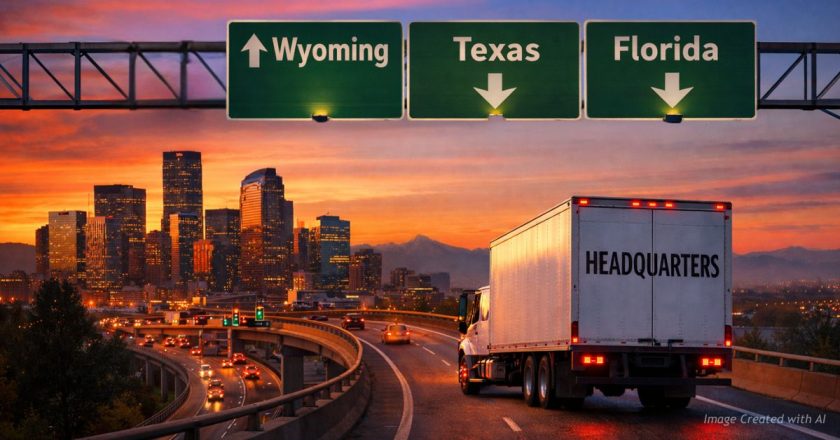
By Jon Caldara | Commentary, The Denver Gazette At this point, if you hear beeping downtown, it’s not a construction crew. It’s a company backing out. And look, I get it. Businesses relocate for all sorts of reasons: taxes, regulations, labor costs, office space, crime, commute times, the haunting feeling your chief executive is one City Council meeting away from being declared a single-use plastic. But Colorado’s political class has been turning “headquarters” into an endangered species. Take TIAA, the financial services giant whose name has for decades been glowing atop a downtown Denver skyscraper like a Bat-Signal for retirement funds. They’re relocating to Frisco, Texas. Texas? Of course, Texas. If Colorado is the place where we hold hearings on the carbon ...
Colorado Regulatory Climate Draws Scrutiny After Palantir Relocates Headquarters to Florida
Complete Colorado, Approved, Commentary, State

Colorado Regulatory Climate Draws Scrutiny After Palantir Relocates Headquarters to Florida

By Vanessa Rutledge | Commentary, Complete Colorado The technology company Palantir recently announced it is relocating its headquarters from Denver to Miami. This is not a minor startup leaving quietly. Palantir is the largest public company headquartered in Colorado when measured by market capitalization. It is one of the most prominent and profitable artificial intelligence companies in the country. In explaining its reasoning, Palantir made no bones about what prompted the move. In its 2025 10-K filing, the company stated: “In addition, Colorado has passed a Consumer Protections for Artificial Intelligence bill introducing state-level oversight of ‘high-risk’ AI systems, which mirrors language and several provisions appearing in the EU AIA.” That is a dir...
More People Are Leaving Colorado as High Costs and Regulations Take Toll
Colorado Politics, Approved, State

More People Are Leaving Colorado as High Costs and Regulations Take Toll

By Vince Bzdek | Colorado Politics It’s finally happened. Buried in all the self-congratulatory reports about Colorado reaching the 6 million mark in population last year was news that should be keeping our political leaders up at night. For the first time in 20 years, more people left Colorado to go to other states than moved here from elsewhere in the country, 12,100 more. “More outs than ins,” the state demographer’s office said in a statement. I’ve been dreading this moment for years. Colorado’s total net migration – the number of people coming here versus the number of people leaving – has dropped by over 50% from 2015 to 2025. That means Colorado’s population growth has now slowed to its lowest level since 1989, according to the state demographer...
Old Divides Return as Colorado Lawmakers Brace for Contentious 2026 Session
Colorado Politics, Approved, State

Old Divides Return as Colorado Lawmakers Brace for Contentious 2026 Session

By Marissa Ventrelli | Colorado Politics Grab your popcorn, it’s going to be an interesting 2026 legislative session in Colorado. There’s not much you can count on these days, but if you’ve been around the Capitol long enough, you’ve probably seen your fair share of disagreements, both friendly and unfriendly — and you can be sure you’ll see even more when the session is gavelled in on Jan. 14. Here are a few of the biggest battles already brewing amongst lawmakers ahead of the session. The urban-rural divide Nearly 80% of Colorado’s land is considered rural or frontier, but about 86% of the state’s population resides in urban areas, according to Census data. The rural minority has long felt excluded from major policy decisions, as many rural legislators ...
Colorado’s Economy Loses Its Edge as Costs and Regulations Rise
Colorado Politics, Approved, State

Colorado’s Economy Loses Its Edge as Costs and Regulations Rise

By: Thelma Grimes | Colorado Politics Editor’s Note: Once among the nation’s fastest-growing economies, Colorado today confronts mounting challenges that threaten its momentum. This series reveals how a state once defined by prosperity is navigating economic cliffs and ridges. We explore the impact of increased regulations, tariffs, shifting tax policies, the high cost of living and widening urban–rural divides have on businesses, workers, and communities. The series also highlights the push to leverage Colorado’s outdoor economy — one of its most valuable assets — for renewed growth, while working to attract industries like quantum and aerospace while capitalizing on unique industries that call Colorado home. After taking office seven years ago, Gov. Jared Polis set an imm...
Colorado’s Competitive Edge Fades Under High Taxes and Regulation
Complete Colorado, Approved, State

Colorado’s Competitive Edge Fades Under High Taxes and Regulation

By: Nash Herman | Complete Colorado The non-partisan Tax Foundation just published its 2026 edition of the State Tax Competitiveness Index. Colorado — already in the bottom half of states for tax competitiveness — continues to slide in the rankings, and the current political trajectory will only exacerbate the situation. Colorado losing its edge  In last year’s index, Colorado placed 32nd in overall tax competitiveness, worse than all of the state’s immediate neighbors.  According to its subcategories, Colorado ranked 10th in corporate taxes, 18th in individual income taxes, 37th in sales taxes, 36th in property taxes, and 39th in unemployment insurance taxes.  This year, Colorado’s rank dropped to 33rd ...
Is the Colorado Economy More of a Train Wreck than it Currently Appears?
Rocky Mountain Voice, Commentary, State, Top Stories

Is the Colorado Economy More of a Train Wreck than it Currently Appears?

By Mike O’Donnell | Guest Commentary, Rocky Mountain Voice Given all the sad news last week, a September 9 press release from the U.S. Bureau of Labor Statistics (BLS) announcing a major downward revision in job numbers for March 2024 to March 2025 was understandably overlooked. The serious implications the announcement had for the national and especially the Colorado economies still, nonetheless, remain today. Revisions to BLS jobs numbers are normal and happen annually because the monthly estimates of how many new jobs are being created or lost in the economy come from surveys of around 121,000 businesses representing about 631,000 individual worksites. Because companies come and go, the BLS combines their survey data with estimates of how many net new jobs are being created at ...
O’Donnell: Colorado isn’t creating jobs—it’s creating unemployment
Rocky Mountain Voice, Approved, Commentary, State, Top Stories

O’Donnell: Colorado isn’t creating jobs—it’s creating unemployment

By Mike O’Donnell | Guest Commentary, Rocky Mountain Voice  January 2023 was a changeover month of sorts in the United States because it marked a division between the taxpayer subsidized COVID economy and the less subsidized post-COVID economy. According to the latest U.S. Bureau of Labor Statistics (BLS) data, the United States added 3,149,000 jobs between January 2023 and June 2025, a 2.0 percent increase for the nation as a whole.  Employment growth so far this century has averaged just under one percent a year, so the 2.0 percent figure is roughly on track (although preliminary July BLS data are less positive and subject to revision). At the same time, unemployment increased by 1,268,000, a 22.1 percent rise. This is a less positive aspect of the economy that few seem ...

FD863768-0ACF-495E-9D21-2EF784DFFA6B[1]

Join us at RMV's Freedom Festival

Click Here for Tickets!

This will close in 0 seconds