Rocky Mountain Voice

Tag: Colorado water

Victor Marx Calls for Water Storage Expansion and Modern Infrastructure
The Denver Gazette, Approved, State

Victor Marx Calls for Water Storage Expansion and Modern Infrastructure

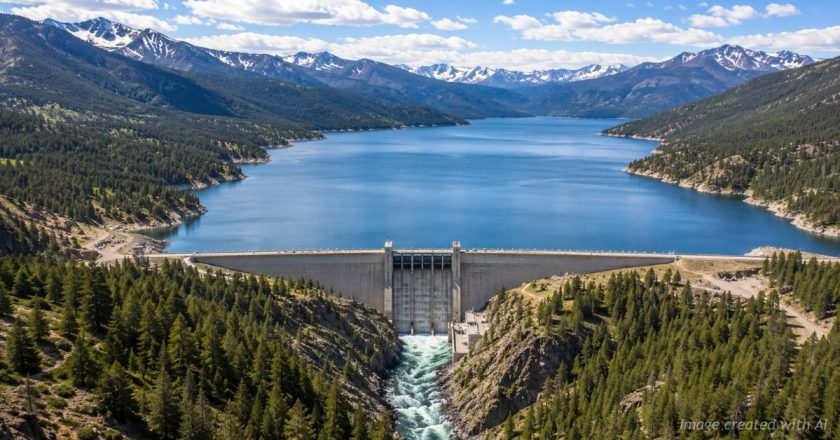
By Marianne Goodland | The Denver Gazette Victor Marx, the Republican nominee for governor, took the spotlight Wednesday during the opening day of the Colorado Water Congress, laying out how he says the state should approach its water future. Marx told the standing-room-only audience in Steamboat Springs that he holds water rights himself, giving him a personal stake in Colorado’s water challenges. His proposed fix? More storage. “We can’t make it snow, we can’t make it rain, but we can decide whether we’re prepared for when the water comes,” he said. “So, I believe we should store water in good years. Wet years. Lord, please send it.” He said storage gives farmers and ranchers reliability, options for communities and reduces emergency decisions. “...
Lake Mead And Lake Powell Hit Historic Lows As Colorado River Crisis Deepens
The Denver Gazette, Approved, State

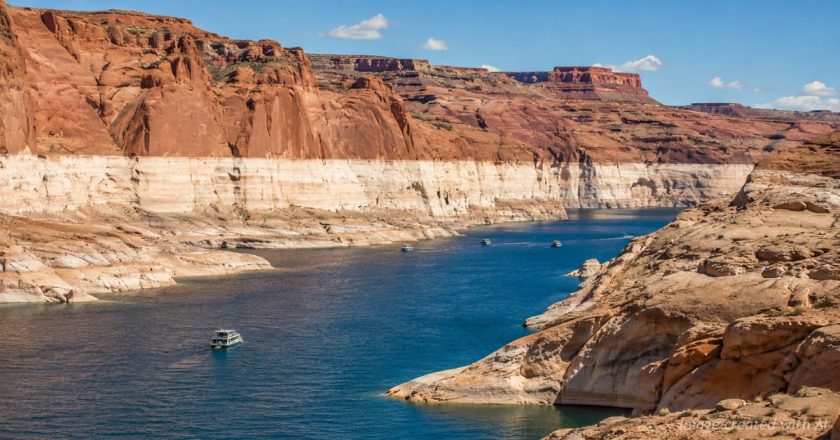
Lake Mead And Lake Powell Hit Historic Lows As Colorado River Crisis Deepens

By Marianne Goodland | The Denver Gazette In the past 10 days, both Lake Mead on the Arizona-Nevada border and Lake Powell roughly 300 miles northeast on the Utah-Arizona line have recorded their lowest water levels since the reservoirs were first filled. Lake Mead, the nation’s largest reservoir and which supplies water to Nevada, Arizona and California, measured 1,040.4 feet above sea level on Aug. 7. The level has continued to drop since then. On Monday, the reservoir measured 1,039.83 feet above sea level, nearly 190 feet below full and down about 2 feet over the past 30 days. A year ago, Lake Mead stood at roughly 1,054 feet. Hoover Dam, which created Lake Mead, was built in 1935. The reservoir was last at full in 1983. If the reservoir loses an...
When Colorado’s water runs short what should come first: Food or fairways?
GregWalcher.com, Approved, Commentary, State

When Colorado’s water runs short what should come first: Food or fairways?

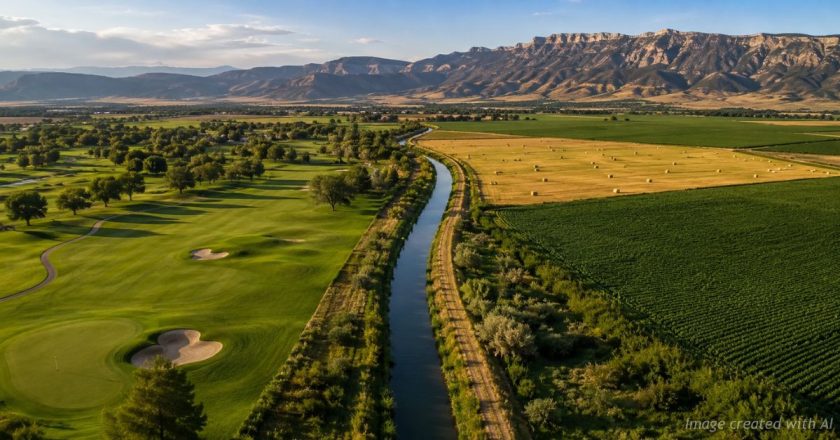
By Greg Walcher | Commentary, GregWalcher.com I met a guy at a golf course recently who expressed grave concern about the health of the grass this summer, because of Colorado’s ongoing drought. We hadn’t met before and knew nothing of each other’s backgrounds. But he entertained me with a tirade about Colorado’s waste of water, especially for agriculture. He asserted that 85 percent of Colorado’s precious water is used to raise livestock and feed for livestock, an outrage when there is so little for watering the greens and fairways. I was tempted to ask the man if he is a vegetarian, but I didn’t because I already knew the answer. Of course he is not a vegetarian; he is one of those activists who wants everyone else to change their lifestyles. The kind who want everyone else to r...
Colorado ignored the warning: Now the aspens are disappearing
GregWalcher.com, Approved, Commentary, State

Colorado ignored the warning: Now the aspens are disappearing

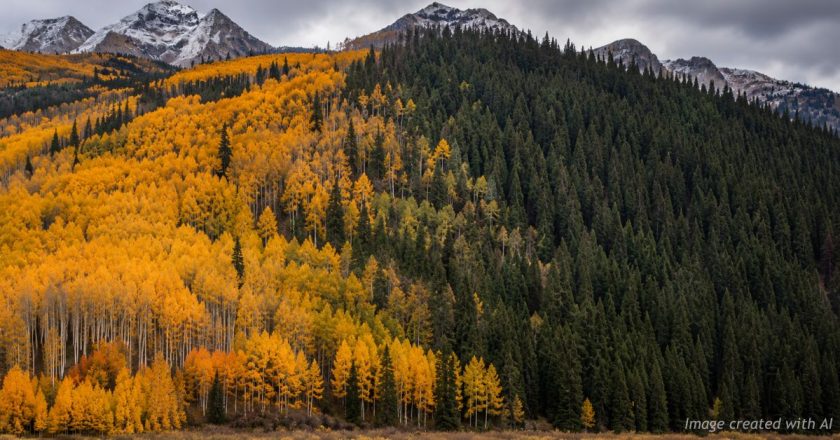
By Greg Walcher | Commentary, GregWalcher.com German philosopher Arthur Schopenhauer wrote that “Truth passes through three stages. First, it is ridiculed. Second, it is violently opposed. Third, it is accepted as self-evident.” Twenty-eight years ago, in the summer of 1998, the Club 20 Research Foundation published a report called “Decline of the Aspen: A Special Report on the Health of National Forests in Colorado.” It attracted substantial media coverage, widespread opposition to its recommendations, and even ridicule from some environmental industry groups that considered themselves superior experts on forest management. The Report suggested a growing crisis in Western Colorado’s aspen forests. Then-State Forester James Hubbard was quoted saying, “If the U.S. Forest Service po...
Before blaming alfalfa for Colorado’s water woes, consider what the headlines leave out
Colorado Accountability Project, Approved, Commentary, State

Before blaming alfalfa for Colorado’s water woes, consider what the headlines leave out

By Cory Gaines | Commentary, Colorado Accountability Project Alfalfa and water use: comparing apples to oranges There is a media narrative out there about alfalfa which, though not entirely wrong, is desperately in need of context; this being another example of why reporters parachuting into rural areas of the state to report on things prior to running back to the Front Range is doing no one any good (rural or urban). The claim was recently repeated in a Sun article, along with its natural follow-on. Quoting from the first link below: “It takes 44 inches of water a year in Burlington to grow alfalfa. Only about 10 inches of water drops on Burlington in a year. It only takes 15 inches of water to grow a healthy crop of black-eyed peas in Burlington. So. The numbers ...
Coastal desalination could save Colorado’s water. The pushback? Cost
Rocky Mountain Voice, Commentary, State, Top Stories

Coastal desalination could save Colorado’s water. The pushback? Cost

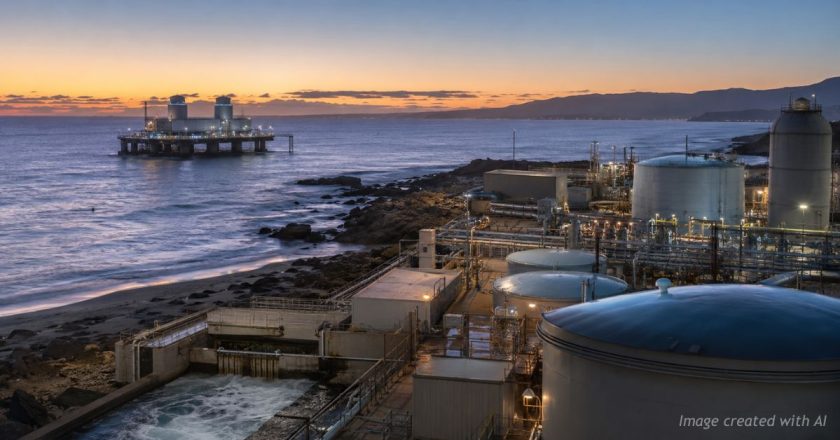
By Michael J Badagliacco, “MJB” | Guest Commentary, Rocky Mountain Voice Colorado’s water rights must never become a bargaining chip.  The 1922 Colorado River Compact apportioned 7.5 million acre-feet annually to the Upper Basin, including Colorado, and the same amount to the Lower Basin states. The 1928 Boulder Canyon Project Act fixed specific Lower Basin shares: California 4.4 million acre-feet, Arizona 2.8 million acre-feet, and Nevada 0.3 million acre-feet. The 1948 Upper Colorado River Basin Compact later assigned Colorado roughly 51.75% of the Upper Basin’s share, or about 3.86 million acre-feet. The 1964 Arizona v. California Supreme Court decree confirmed federal oversight of these mainstream allocations while highlighting the need for supply solutions beyond repeate...
Trump Rejects Arkansas Valley Water Pipeline Bill Citing Federal Taxpayer Burden
DENVER7, Approved, State

Trump Rejects Arkansas Valley Water Pipeline Bill Citing Federal Taxpayer Burden

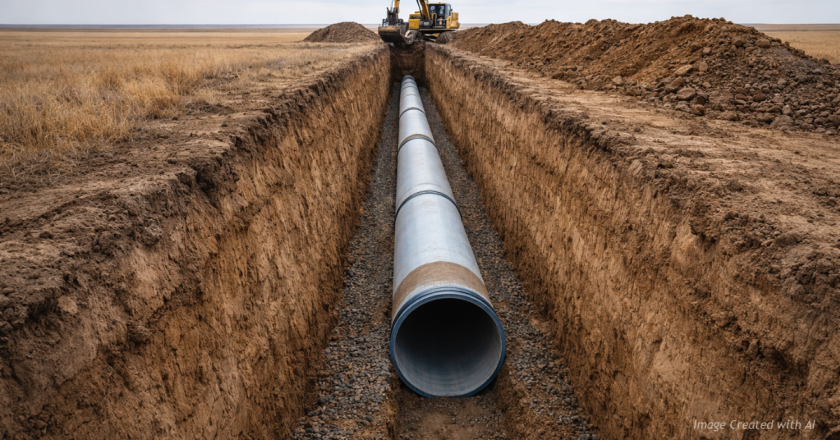
By Sophia Villalba | Denver7 DENVER — President Trump has vetoed a bill aimed at providing reliable, clean drinking water to rural communities in southeastern Colorado. It's another setback for the decades old "Finish the Arkansas Valley Conduit Act" that would have completed a 130-mile pipeline bringing drinking water to 39 Colorado communities on the Eastern Plains. This is the president's first veto of his second term in the Oval Office. He rejected the bipartisan bill that passed both the U.S. House of Representatives and Senate unanimously, saying the project would cost federal taxpayers too much money. The Arkansas Valley Conduit was first approved back in 1962, but according to the Southeastern Colorado Water Conservancy District, it wasn’t built for deca...
Lower Arkansas Valley Farmers Sound Alarm Over Urban Water Demand
KRDO.COM, Approved, Local

Lower Arkansas Valley Farmers Sound Alarm Over Urban Water Demand

By Bart Bedsole | KRDO OTERO COUNTY, Colo. (KRDO) - There is a battle going on right now across the west between cities and farming communities... over water.  Southeastern Colorado has become a target lately of large thirsty cities, but now many of the folks who live there are voicing concerns about not only the future of their farms but the future of America’s food supply.  The Hanagan family in Otero County is among them.  Kim runs the family’s market along Highway 50 most of the time, where her sons frequently arrive with new shipments, while Eric Hanagan manages the farm a few miles south of Swink. He is the fifth generation in his family to farm their land, which now includes about a thousand acres. "We were founded about 1909," he says, “It...
West Slope’s Conscience v. Denver’s Memory
GregWalcher.com, Commentary, State, Top Stories

West Slope’s Conscience v. Denver’s Memory

By Greg Walcher | Commentary, GregWalcher.com Washington Evening Star humorist Philander Chase Johnson created a great character named Senator Sorghum. A 1902 piece called “A Delicate Distinction” had one character saying, “That friend of yours seems to have a clear conscience.” Senator Sorghum answered, “No, not a clear conscience; merely a bad memory.” A convenient memory is common in politics. And current negotiations regarding the Colorado River District’s attempt to purchase the Shoshone water rights from Excel Energy provide a perfect example. Water providers up and down the Front Range, and especially Denver Water, seem to be conveniently forgetting the agreement made more than a decade ago – to support the purchase, and even help finance it. No water rights question i...
Front Range Water Providers Clash Over  Shoshone Rights
Colorado Politics, Approved, State

Front Range Water Providers Clash Over Shoshone Rights

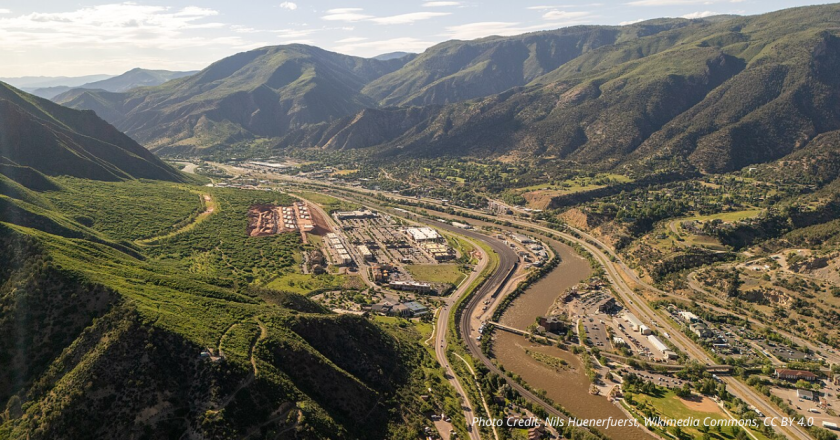
By Marianne Goodland | Colorado Politics A million acre-feet of water in the Colorado River — and the efforts by Western Slope water partners to keep it there — became the subject of a recent two-day hearing that could decide just who gets water and how much. One of the major points of tension is the objection by several water providers — not to the deal, per se, between a subsidiary of Xcel Energy and the Colorado River Water Conservation District and its 32 partners — to keep the water in the river that flows through the Public Service Company of Colorado’s Shoshone hydropower plant six miles east of Glenwood Springs in the Colorado River. Public Service Company of Colorado (PSCo), the Xcel subsidiary, would still retain lease rights for that water, according to the deal. Rat...