Rocky Mountain Voice

Tag: dROUGHT

Colorado, Western States Face Federal Deadline to Avert Colorado River Showdown
The Denver Gazette, Approved, State

Colorado, Western States Face Federal Deadline to Avert Colorado River Showdown

By Marianne Goodland | The Denver Gazette This Tuesday is the deadline set by the U.S. Bureau of Reclamation for the seven states of the Colorado River to develop a framework for an agreement governing the river’s operations. But that agreement seems just as far away now as it did when Scott Cameron, who was named acting head of the Bureau of Reclamation in October, announced the deadline in June. Cameron told the Arizona Reconsultation Committee during its June meeting that Secretary of the Interior Doug Burgum is prepared to act if the seven states failed to come up with the agreement framework by this week’s deadline. “Our goal is to parachute a seven-state deal” into an environmental impact statement the agency is developing and as the preferred alternative in Mar...

Colorado River reality check: The problem isn’t the compact, it’s overuse.
Rocky Mountain Voice, Commentary, State, Top Stories

Colorado River reality check: The problem isn’t the compact, it’s overuse.

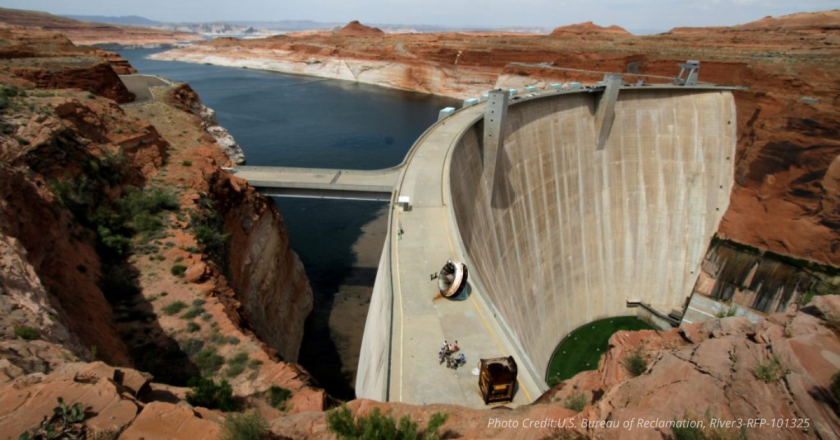
By Steve Harris | Guest Commentary, Rocky Mountain Voice This is my final article on the centennial of the Colorado River Compact (CRC) and the 75th anniversary of the Upper Colorado River Compact (UCRC), collectively referred to as the ‘Compacts.’” In water time, the Compacts are not that old. I have been in the water business in the Colorado River basin for 50 years – half of the CRC’s life – and watched how people viewed the implications of the Compacts over time. The Compacts have gone from background documents to front and center of water discussions. Lake Mead Fall 2022, Photo Credit: John Norton There has been a lot of hand-wringing in the media and some groups about the CRC being based on 15 million acre-feet (MAF), even though at the time there was an assumed aver...
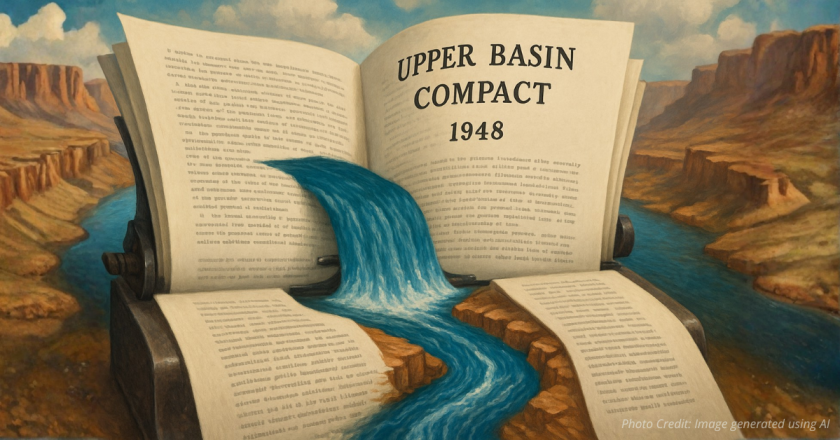
The Upper Basin Compact in a nutshell
Rocky Mountain Voice, Commentary, State, Top Stories

The Upper Basin Compact in a nutshell

By Steve Harris | Guest Commentary, Rocky Mountain Voice Editor’s note: This is Part 5 of 6 in the Water Time Reflections series by Steve Harris, marking 100 years since the Colorado River Compact. In this installment, Harris examines the 1948 Upper Colorado River Basin Compact—how it divided water among the Upper Basin states, shaped drought management, and continues to guide allocations today. For those of us in the Upper Colorado River Basin, we have the Upper Colorado River Basin Compact (UBC) that was negotiated from 1946 to 1948, and was ratified in 1948 (a copy is available by clicking here). The UBC is as important to the Upper Basin States as the Colorado River Compact (CRC) is for the entire basin because it allocates water to each state including during shortages. Though n...
Western Water Crisis Deepens as Key Colorado River Decisions Loom
The Fence Post, Approved, State

Western Water Crisis Deepens as Key Colorado River Decisions Loom

By Ali Longwell | The Fence Post Western Slope elected officials, water managers, engineers and conservationists met in Grand Junction on Friday, Oct. 3, all focused on one thing: the uncertain future of the Colorado River. “Water users, as a lot, tend to crave certainty, and that certainty seems more and more elusive these days,” said Peter Fleming, general counsel for the Colorado River District, at this year’s annual seminar hosted by the River District. Andy Mueller, the River District’s general manager, said the Colorado River Basin was “at a crossroads.” While the seminar broached many of the challenges and opportunities facing those who rely on the Colorado River, most discussions came back to two looming decisions that will dictate how the future looks for the 40 millio...
Rio Grande crisis leaves farmers desperate and states divided
Fortune, Approved, National

Rio Grande crisis leaves farmers desperate and states divided

By Susan Montoya Bryan, Morgan Lee | The Associated Press via Fortune A simmering feud over management of one of North America’s longest rivers reached a boiling point when the U.S. Supreme Court sent western states and the federal government back to the negotiating table last year. Now the battle over waters of the Rio Grande could be nearing resolution as New Mexico, Texas and Colorado announced fresh settlement proposals Friday designed to rein in groundwater pumping along the river in New Mexico and ensure enough river water reliably makes it to Texas. New Mexico officials say the agreements allow water conservation decisions to be made locally while avoiding a doomsday scenario of billion-dollar payouts on water shortfalls. Farmers in southern New Mexico increasingly have...
Walcher: Colorado River drought studies blame climate change, not federal land mismanagement
GregWalcher.com

Walcher: Colorado River drought studies blame climate change, not federal land mismanagement

By Greg Walcher | Commentary, GregWalcher.com Here is a late-breaking flash from a new study released last month at the University of Arizona: westerners use too much water. Pete Seeger’s 1960s folk standard, “Where Have All the Flowers Gone,” is in the Grammy Hall of Fame, made a genuine classic through cover versions by the Kingston Trio; Peter, Paul and Mary; Joan Baez; and at least 50 others. It is often quoted, generally out of context, as will be the case here, because of the line closing each stanza, “When will they ever learn.” I hear it occasionally in arguments about endangered species, as in, “Where have all the flowers gone, young girls picked them, every one.” I think of it more in connection with these never-ending “studies” about the Colorado River, how much more wa...
In order to help farmers survive drought, pests and market changes, improving the soil may be key
Approved, State, The Colorado Sun

In order to help farmers survive drought, pests and market changes, improving the soil may be key

By Shannon Mullane | The Colorado Sun In southwestern Colorado, Greg Vlaming crouched down to look at dying remains of an oat crop baking under the July sun. It wasn’t just a dead plant — it was armor, he said.  “This minimizes wind erosion and surface runoff,” said Vlaming, a soil scientist, consultant and farmer. “Water can’t run off on something that’s like this.” Vlaming is working alongside the state, researchers, farmers and ranchers on a newly expanded soil health program established by the Colorado legislature in 2021. The goal of the program is to nurture soils in order to reap rewards — like more efficient irrigation, more carbon storage and healthier crops.  READ THE FULL STORY AT THE COLORADO SUN