Rocky Mountain Voice

Tag: Electric Grid

Colorado’s newest coal plant hasn’t run since August 2025. A national report suggests why.
Rocky Mountain Voice, State, Top Stories

Colorado’s newest coal plant hasn’t run since August 2025. A national report suggests why.

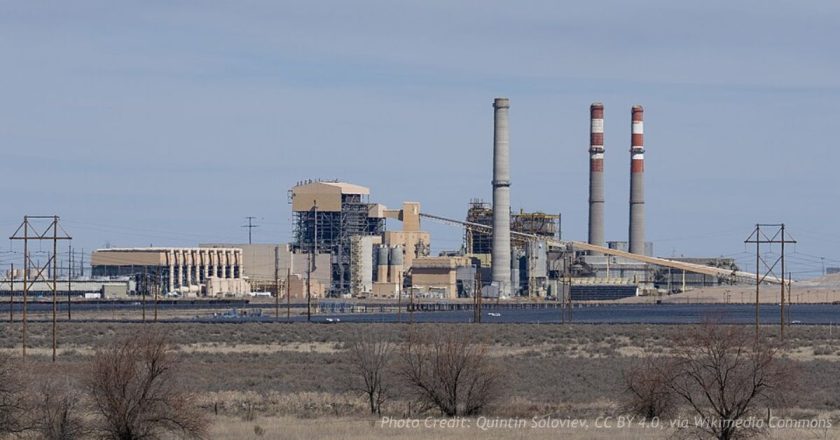
By Shaina Cole | Contributing Writer, Rocky Mountain Voice Xcel Energy's Comanche 3 power plant in Pueblo went offline on August 12, 2025, after elevated vibrations damaged the turbine. Nearly a year later, it still hasn't produced a single watt. According to Xcel's most recent monthly report to state regulators in Proceeding 25V-0480E, filed July 22, the plant's turbine rotor had to be shipped off-site for repair by Mitsubishi. The parts came back this summer. Workers are now in the middle of reassembling the unit. The company's current estimate for return to service is mid-August 2026. That's twelve months offline for Colorado's newest, largest coal plant, a 750-megawatt facility that cost $1.3 billion to build and runs about $34.5 million a year to operate. The outage ha...
Months of Power Outages Leave Littleton Neighborhood Looking for Solutions
CBS Colorado, Approved, Local

Months of Power Outages Leave Littleton Neighborhood Looking for Solutions

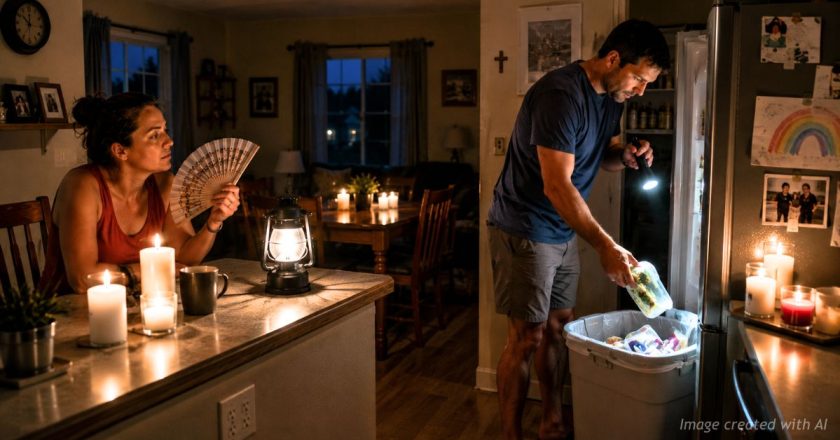
By: Kelly Werthmann | CBS Colorado It's been a tough week in Colorado if you struggle with the heat, especially if you don't have access to any sort of cooling measures. Residents say that's what happened in the Columbine Hills neighborhood in Littleton when the power went out for hours at a time. And they say this has been happening since last summer. "We feel like prisoners in our own neighborhood," said resident Brandon Darnell. Darnell s ays he's pretty sick of losing power at his Littleton home. He says it's never a brief outage. "It's a while. It's like, I think at minimum usually four hours," said Darnell. He says it has cost him money. "I've had to throw a lot of money worth of meat away," said Darnell. And it's affected his job. ...
Colorado Faces Growing Concerns Over Grid Reliability and Energy Costs
Complete Colorado, Approved, State

Colorado Faces Growing Concerns Over Grid Reliability and Energy Costs

By Mike Krause | Complete Colorado In a recent episode of Independence Institute’s* PowerGab energy podcast, hosts Amy Cooke and Jake Fogleman look at the mounting consequences of Colorado’s forced energy transition to renewables, focusing on recent warning from Xcel Energy before the Colorado Public Utilities Commission (PUC) that the state could face a significant power generation shortfall beginning next summer, increasing the risk of rolling blackouts. Cooke and Fogleman contend that regulators have prioritized emissions reductions while giving short shrift to the costs and reliability challenges of replacing dispatchable generation with renewable energy and battery storage. READ THE FULL ARTICLE AT COMPLETE COLORADO
Colorado’s renewable milestone deserves a reality check
Colorado Accountability Project, Approved, Commentary, State

Colorado’s renewable milestone deserves a reality check

By Cory Gaines | Commentary, Colorado Accountability Project Sarah Montalbano, the author of the Complete Colorado piece below makes a great point in her article about renewables. In response to a recent article by fellow energy writer Allen Best, see the second link below, about Colorado hitting an energy milestone of “More than half the state’s electricity came from wind, solar and hydro during the first months of 2026”, Montalbano notes that perhaps it’s not time for celebrating yet. Quoting from her Complete piece, “The trouble is that this jubilant announcement of a ‘majority’ renewables power grid owes more to a stark drop in coal-fired generation than the wind and solar that was added. Percentages rely on both the numerator — how much wind, solar, and hydropower...
Xcel says it has no affordability crisis. Its customers and regulatory filings tell another story.
Rocky Mountain Voice, State, Top Stories

Xcel says it has no affordability crisis. Its customers and regulatory filings tell another story.

By Jen Schumann | Rocky Mountain Voice Every week, Carlos H. sits down with his bills and works out what his family can go without. Some weeks it is dinner. “I just opt out to say, hey, okay, maybe won’t be cooking up something tonight, so we can just make ends meet,” the Denver father said. Some weeks it is gas—a quarter tank instead of a full one, and the math of whether that gets him to the next payday. He has a 14-year-old daughter and a baby due in February. His electric bill runs $120 to $150 a month. A proposed Xcel settlement could push it higher. “We don’t have an affordability crisis,” Robert Kenney, president of Xcel Energy Colorado, told the House Energy and Environment Committee on April 23, arguing against a proposal to give regulators more power over how util...
NERC Report Raises New Questions About Colorado Energy Reliability
Complete Colorado, Approved, State

NERC Report Raises New Questions About Colorado Energy Reliability

By: Sarah Montalbano | Complete Colorado The North American Electric Reliability Corporation’s (NERC) 2026 State of Reliability report contains lessons for Colorado’s electricity sector. While the grid as a whole “continues to deliver reliable electric service,” challenges are mounting thanks in part to the “declining availability of aging combustion generation.”  NERC’s report finds that power plants failed more in 2025, with the fleet-wide forced outage rate climbing to 9.2 percent against “historical norms rarely exceeding” 8 percent. Coal-fired plants saw their forced outage rate rise from 11.2% in 2024 to 14.1% in 2025. NERC surveyed owners of generators that s...
DOE report warns of blackout risk soaring amid push to shut conventional power
Power Engineering, Approved, National

DOE report warns of blackout risk soaring amid push to shut conventional power

By Paul Gerke, Kevin Clark | Power Engineering The U.S. Department of Energy (DOE) began the week following Independence Day with a bang, releasing a report that the status quo is unsustainable for the U.S. electric grid. According to DOE, blackout risks in 2030 could be 100 times higher if the U.S. keeps shutting down conventional power plants. According to DOE’s analysis, the grid will not be able to sustain an estimated 104 gigawatts (GW) of baseload generation retirements by 2030 and isn’t prepared to meet the growth in electricity demand driven by data centers and artificial intelligence (AI). The DOE expects an additional 100 GW of new peak-hour supply to be needed by then; half of that growth is directly attributable to data centers. The United States has more tha...