Rocky Mountain Voice

Tag: Forest management

States step up: New agreements reshape control of Western forests
GregWalcher.com, Approved, Commentary, National

States step up: New agreements reshape control of Western forests

By Greg Walcher | Commentary, GregWalcher.com I attended a meeting recently about federal ownership of Western lands, and various proposals to transfer some of it to states. To settle a bet, I asked a popular AI tool how that might work, just to test its objectivity. It said, “Transferring public lands to state control can lead to significant challenges and risks for public access and conservation.” It explained that states have limited authority to manage; lack money and staff; might each manage lands differently, “undermining broader conservation goals and ecosystem resilience;” are more subject to political pressures; and might limit public access. So much for objectivity – as if the public is welcome on all federal lands, which are managed perfectly, because federal agencies are...
Congress Should Fix Our Forests Before the Next Red Flag Warning
Rocky Mountain Voice, State, Top Stories

Congress Should Fix Our Forests Before the Next Red Flag Warning

By Hunter Rivera | Guest Commentary, Rocky Mountain Voice I still remember the orange sky over Loveland in October 2020: ash on windshields, headlights at noon, and a horizon rimmed with flame. The Cameron Peak Fire burned more than 200,000 acres across the Arapaho and Roosevelt National Forests and Rocky Mountain National Park, destroying hundreds of structures and forcing thousands to evacuate. The same month, the East Troublesome Fire exploded across Grand County, jumping the Continental Divide and claiming lives. Those weren’t abstract “Western wildfire” headlines. They were in Northern Colorado’s front yard. If you want to remember what megafire really means, drive Highway 14 toward Cameron Pass. Mile after mile, blackened trunks still stand like matchsticks where forest...
Smoke and ash drive Colorado’s animals to the edge of survival
Summit Daily, Approved, State

Smoke and ash drive Colorado’s animals to the edge of survival

By Allisyn Capel | Summit Daily With wildfires raging across Colorado amid extreme drought conditions, the state's inhabitants -- human and wildlife alike -- are bracing for impacts. On Friday, Aug. 22, around 207,500 acres were burning across the state in 17 fires. The vast majority of this acreage is attributed to nine large fires on the Western Slope. "Wildfires can have significant negative impacts to the landscape, wildlife and homes," said Brad Banuli, Colorado Parks and Wildlife's northwest region senior terrestrial biologist. In the last month, wildfires have prompted Parks and Wildlife to evacuate hundreds of native trout from the Stoner Mesa Fire in the San Juan Mountains, monitor a variety of wildlife species and habitats, and alter fall hunts for certain bear, elk and ...
Over 4200 Acres Burned in South Rim Wildfire, Now 50% Contained
Local, Approved, kdvr.com

Over 4200 Acres Burned in South Rim Wildfire, Now 50% Contained

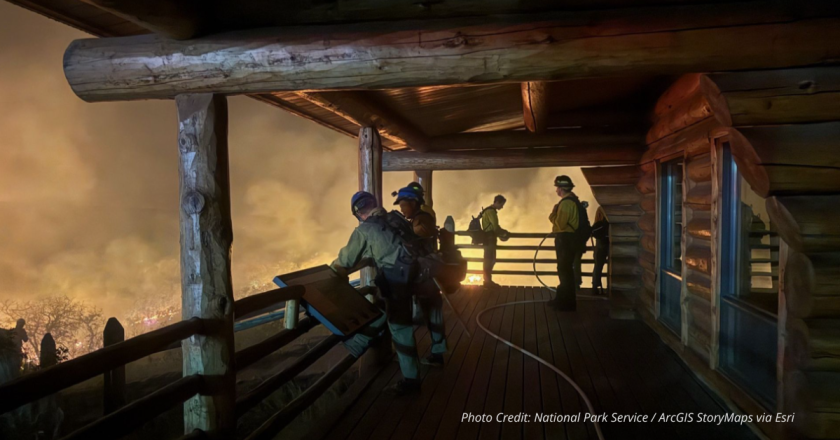
By Jacob Factor | KDVR Fox31 DENVER (KDVR) — As containment grows for the more than 4,000-acre wildfire burning in Black Canyon of the Gunnison National Park, officials have detailed some of the park’s losses, what crews have saved and what’s next for the park as portions reopen. Fire officials recently published a detailed story map of the South Rim Fire, which has burned about 4,200 acres in the National Park in Montrose County and just Wednesday surpassed 50% containment. The fire has been burning since lightning ignited it and several other Colorado wildfires on July 10. Fire officials in a Wednesday morning update said the north rim side of the National Park is also set to reopen Wednesday. Here’s a look at where the South Rim Fire is now and how the Black Canyon of the Gu...
Walcher: How the ‘Roadless Rule’ fuels forest destruction
GregWalcher.com, Approved, Commentary, National

Walcher: How the ‘Roadless Rule’ fuels forest destruction

By Greg Walcher | Commentary, GregWalcher.com Gertrude Stein wrote her oft-repeated line “A rose is a rose is a rose…” in a 1913 poem. She explained it as meaning “things are what they are.” But what if it’s called something else? That was Juliet’s question to Romeo: “What’s in a name? That which we call a rose, by any other name would smell as sweet.” Shakespeare argued that whatever we call something, it is still what it is. Would that such common sense had been applied during 30 years of political arguments over which national forest lands were “roadless.” And what exactly should be considered a road. Anyone who thought that issue long since resolved got a wakeup call with this year’s catastrophic California wildfires that killed 24 people, destroyed 1,400 homes, and refocused ...
30,000 Acres and Counting: Western Colorado Faces Worst Fire Season Yet
State, Approved, denvergazette.com

30,000 Acres and Counting: Western Colorado Faces Worst Fire Season Yet

Grace Brajkovich | The Denver Gazette Several wildfires continue to eat their way through western Colorado's mountainous terrain, with one growing more than 6,000 acres overnight and another crossing over from Utah, according to emergency officials. The four major wildfires on the western half of the state, including the one coming from Utah, have burned over 35,000 acres of land, according to Inciweb, a government wildfire tracker.  The scorching weather and "extreme" drought conditions still fan the blazes' flames as firefighters try to navigate steep, jagged terrain and fight back the four wildfires that prompted Gov. Jared Polis to issue a disaster declaration Sunday.  Here's a roundup from fire officials Wednesday. Turner Gulch and Wright Draw firesM...
Trump Cuts Through Forest Bureaucracy With Common-Sense Logging Reform
National, Approved, DENVER7

Trump Cuts Through Forest Bureaucracy With Common-Sense Logging Reform

By: Morgan Lee and Becky Bohrer | Denver7 SANTA FE, N.M. (AP) — The Trump administration plans to rescind a nearly quarter-century-old rule that blocked logging on national forest lands, Agriculture Secretary Brooke Rollins announced Monday. The roadless rule adopted in the last days of Bill Clinton's presidency in 2001 long has chafed Republican lawmakers, especially in the West where national forests sprawl across vast, mountainous terrain and the logging industry has waned. The rule impeded road construction and “responsible timber production” that would have helped reduce the risk of major wildfires, Rollins said at the annual meeting of the Western Governors Association. “This move opens a new era of consistency and sustainability for our nation’s forests," Rollins said. ...
Walcher: Squirrels Killed by the Forest Service, or the Courts?
Approved, Commentary, Greg Walcher, Rocky Mountain Voice

Walcher: Squirrels Killed by the Forest Service, or the Courts?

By Greg Walcher | Guest Commentary, GregWalcher.com In 2017 the Arizona Game and Fish Department estimated that there were only 252 Mount Graham red squirrels left. They only inhabited a few hundred acres in the 10,000-foot Pinaleño Mountains, not equipped to survive the heat of the surrounding deserts. Then, a lightning strike started a 48,000-acre fire in that section of the Coronado National Forest, incinerating all but 35 of the Mount Graham squirrels in existence. Federal and state wildlife officials thought the species faced likely extinction. It is a more common story than you might think. The Journal Science published a study in 2020 called “Fire and biodiversity in the Anthropocene,” analyzing the danger of wildfires to threatened and endangered species. Across nine taxonomi...
Linnebur: In the battle of flames and bureaucracy, these are streamlining solutions for Colorado’s wildfire crisis
Approved, Commentary, Rocky Mountain Voice, State

Linnebur: In the battle of flames and bureaucracy, these are streamlining solutions for Colorado’s wildfire crisis

By Tyler Linnebur | ConservAmerica On Tuesday, July 30, Colorado Gov. Jared Polis declared disaster emergencies for multiple wildfires and activated the state emergency operations plan. These major fires, fueled by extreme heat and dry conditions, are raging across thousands of acres near Loveland, Lyons, and Jefferson County. Tragically, at least one person has died, and multiple homes have been destroyed.  This devastating scenario has become increasingly common in recent years because of drought, poor forest management\ and ineffective environmental policies. Massive fires cause extensive property damage, force evacuations and degrade air quality. The ecological toll is significant, destroying wildlife habitats and damaging watersheds. Several factors contribute to the severi...

FD863768-0ACF-495E-9D21-2EF784DFFA6B[1]

Join us at RMV's Freedom Festival

Click Here for Tickets!

This will close in 0 seconds