Rocky Mountain Voice

Tag: School Choice

Merit Academy: Undeniable Change, A Model For Our Next Victory
Rocky Mountain Voice, Commentary, State, Top Stories

Merit Academy: Undeniable Change, A Model For Our Next Victory

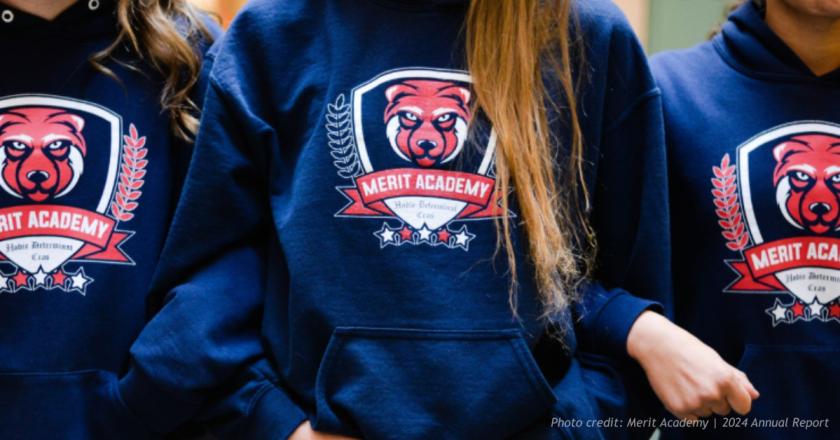
By Eric Gil | Guest Commentary, Rocky Mountain Voice The success of Merit Academy in Woodland Park is no secret. When your school is ranked #5 of all K-12 Colorado Public Schools, it is hard to hide. This article is a look into the origin story of Merit Academy, led by Headmaster Gwynne Pekron. A reminder that we still hold the power to shape our children’s futures and that even when faced with centralized control, a path to real change exists. As a former charter school student and public school teacher, Merit’s story of ascension inspires me to look for ways to ensure our future.   Increased attention toward public education from concerned parents is one of the many lasting outcomes of the 2020 pandemic and the subsequent shifts in education. In Woodland Park, this ...
Teachers Union Pushes Polis To Block Federal Scholarship Option For Families
Complete Colorado, Approved, Commentary, State

Teachers Union Pushes Polis To Block Federal Scholarship Option For Families

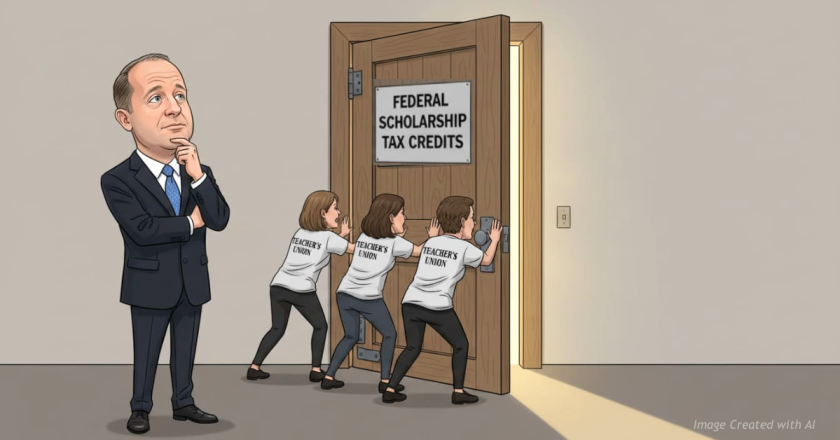
By Ari Armstrong | Complete Colorado Will the Colorado teachers’ union be so spiteful toward private education options that they will deny Colorado families money from privately funded scholarships promoted by federal tax credits? We soon will find out. I first learned of the program in question when the Colorado Sun published Jay Stooksberry’s op-ed on the matter on August 19. As Stooksberry explains, buried within the One Big Beautiful Bill was the Education Choice for Children Act, which allows individuals to “make tax-deductible donations up to $1,700 to scholarship organizations.” Before a state’s families can take advantage, Stooksberry adds, the governor must opt in and “approve a list of qualifying scholarship organizations the year before the donations can ...
Polis opts Colorado into federal scholarship program as education spending swells
Christian Home Educators of Colorado, Approved, Commentary, State

Polis opts Colorado into federal scholarship program as education spending swells

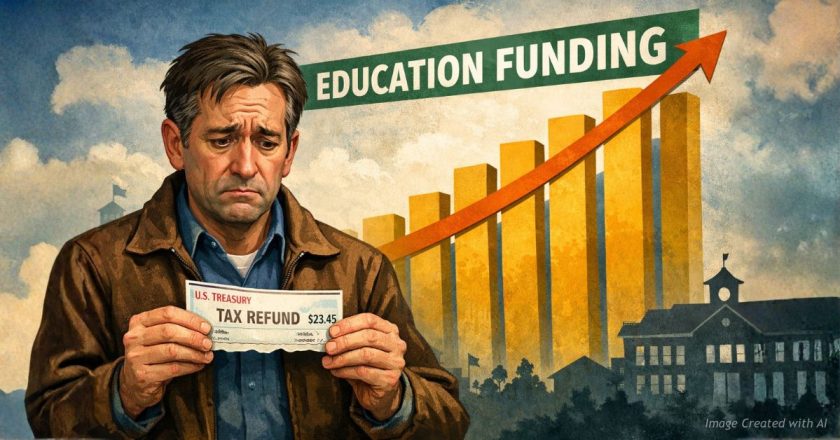
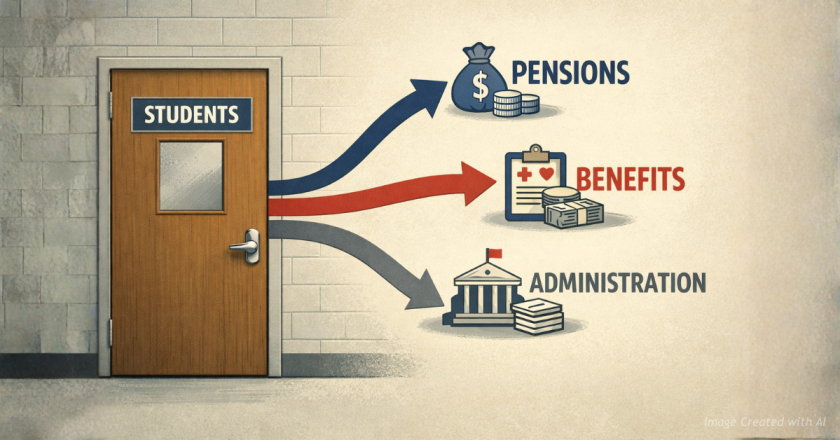
By Colleen Enos | Commentary, Christian Home Educators of Colorado With Christmas right around the corner, we are all shopping in earnest. This flurry of activity makes us focus on our budget and how much we can spend on all that Christmas cheer. We are carefully counting our pennies, while the State of Colorado’s Budget continues to spend more each year. Governor Polis’ budget request for 2026 is over $50 billion. Education spending is no exception. Colorado’s per-pupil spending is $18,130, an increase of 7.4% since 2020, according to the Reason Foundation. As enrollment in public schools continues to decline, funding is going in the opposite direction. Coloradans are asking, “Where is all the money going?” Staffing levels are up, even with a 4.6% drop in public...
DPS Enrollment Drop Points To Deeper Budget Crisis Than School Closures Can Solve
The Denver Gazette, Approved, Local

DPS Enrollment Drop Points To Deeper Budget Crisis Than School Closures Can Solve

By Nico Brambila | The Denver Gazette Enrollment losses in Denver now outpace what school closures alone can address. Denver Public Schools (DPS) Superintendent Alex Marrero is expected to present an update on the district’s enrollment to the board at its meeting this Thursday. During an October count, the district reported an enrollment decline of roughly 1,200 students and about $18 million in lost annual revenue, said Bill Good, a district spokesperson. Because of a practice known as “smoothing” — which averages pupil counts over three years, rather than a single year — the immediate impact has been reduced to about $9 million. READ THE FULL ARTICLE AT THE DENVER GAZETTE
Heidi Ganahl and Tori Stork end the “DougCo Dirty Dozen” with a warning to voters
Rocky Mountain Voice, Local, Top Stories

Heidi Ganahl and Tori Stork end the “DougCo Dirty Dozen” with a warning to voters

By RMV Staff | Rocky Mountain Voice If Colorado’s education battles mirror the nation’s divide, Douglas County may be the front line. After two weeks and twelve hard-hitting episodes, Heidi Ganahl and her daughter, Tori Stork (formerly Ganahl), have made their case through the “Douglas County Dirty Dozen” video series: the state’s most conservative district is facing a coordinated push from national unions and progressive networks intent on steering local classrooms away from parents and community values. The First Six: Unions, Books, and Boundaries Heidi Ganahl's first six videos exposed the growing influence of the American Federation of Teachers (AFT) in Douglas County. Four candidates—Kyrzia Parker, Clark Callahan, Tony Ryan, and Kelly Denzler—each received $2,500 from AFT Col...
Championing Conservative Principles: Balleck, Vincent, Scarborough, and Daly for Montrose County School Board
Rocky Mountain Voice, Commentary, Local, Top Stories

Championing Conservative Principles: Balleck, Vincent, Scarborough, and Daly for Montrose County School Board

By Michael J Badagliacco, “MJB” | Guest Commentary, Rocky Mountain Voice A Critical Moment for Montrose Schools With over 5,000 students across diverse rural and urban communities, the Montrose County School District is at a crossroads. Nationwide, school boards have become battlegrounds for competing visions of education, with too many leaning into divisive ideologies that undermine parental authority and academic rigor. On November 4, 2025, Montrose voters have a chance to steer our schools back to conservative principles by electing Neisha Balleck, Tiffany Vincent, Scott Scarborough, and Shane Daly to the School Board. These four conservative candidates stand for parental rights, fiscal responsibility, school safety, and a focus on core education free from ideological agendas....
Personalized Learning Grows Through Colorado’s Microschools
State, Approved, Complete Colorado

Personalized Learning Grows Through Colorado’s Microschools

By Ellie Carson | Complete Colorado With the Colorado school year quickly approaching, microschools present a promising revitalization of the one-room schoolhouse. Microschools are small learning communities typically serving less than 50 students, but which may have as many as 150. These schools are usually privately funded and launched by parents or educators to offer unique programs that address a specific need or demand in their communities. Low student-to-teacher ratios prioritize giving individual attention to each student. It is difficult to identify all microschools in Colorado due to their unconventional size. Estimates suggest there may be between 100-120 schools currently operating. One example is Highlands Micro School, which operates out of an old residence in Northwe...
Why educational choice matters more than ever in Colorado
Colorado Accountability Project, Approved, Commentary, State

Why educational choice matters more than ever in Colorado

By Cory Gaines | Commentary, Colorado Accountability Project Educational Choice Makes Education Better I saw the op ed below in Complete recently and wanted to share. It details a movement in education that I was not aware of: microschools.A couple of non-contiguous quotes help explain."Microschools are small learning communities typically serving less than 50 students, but which may have as many as 150. These schools are usually privately funded and launched by parents or educators to offer unique programs that address a specific need or demand in their communities. Low student-to-teacher ratios prioritize giving individual attention to each student."and "Driven by a desire for change, most microschools do not adhere to the standard educational model. It is most common for mi...
OBBB Act empowers parents to shape their children’s future
Washington Examiner, Approved, National

OBBB Act empowers parents to shape their children’s future

By Bethany Mandel | Washington Examiner Hardly anyone is talking about it, but Congress has just passed one of the most consequential education reforms in history. Tucked into the One Big Beautiful Bill Act is a provision that could transform how families access education, reshape the politics of schooling, and finally give parents the power to direct their children’s learning. The legislation establishes a first-of-its-kind federal tax credit scholarship program, open to all types of educational settings. Beginning in 2027, people will be able to claim a dollar-for-dollar federal tax credit, up to $1,700 annually, for donations to educational nonprofit groups that fund K–12 scholarships for low- and middle-income students. The scholarships are designed ...