Rocky Mountain Voice

Tag: Water Policy

Private Dollars, Public Rivers: Who Is Really Restoring Colorado’s Streams?
Rocky Mountain Voice, State, Top Stories

Private Dollars, Public Rivers: Who Is Really Restoring Colorado’s Streams?

By Shaina Cole | Contributing Writer, Rocky Mountain Voice Colorado’s rivers are usually talked about as public assets. Debates tend to revolve around access, ownership, and enforcement. Far less attention is paid to a simpler question: who actually pays for the work when rivers need fixing? A recent Common Sense Institute report examines that side of the equation, focusing on stewardship and private investment while building on the group’s earlier work on law and history. Many Colorado landowners have invested in restoring rivers and streams, and the results don’t stop at their boundaries. Work Most People Never See River restoration doesn’t really have a finish line. The report estimates restoration and upkeep costs typically range from $300,000 ...
Colorado River Report Warns Water Crisis Nears Point Of No Return
CBS Colorado, Approved, State

Colorado River Report Warns Water Crisis Nears Point Of No Return

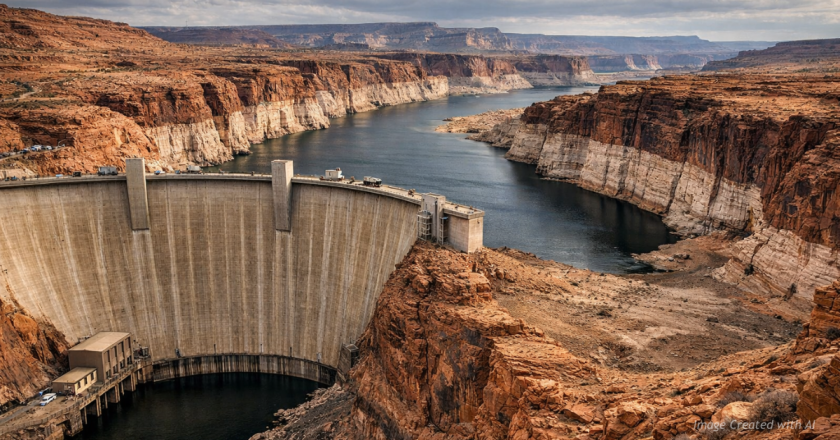
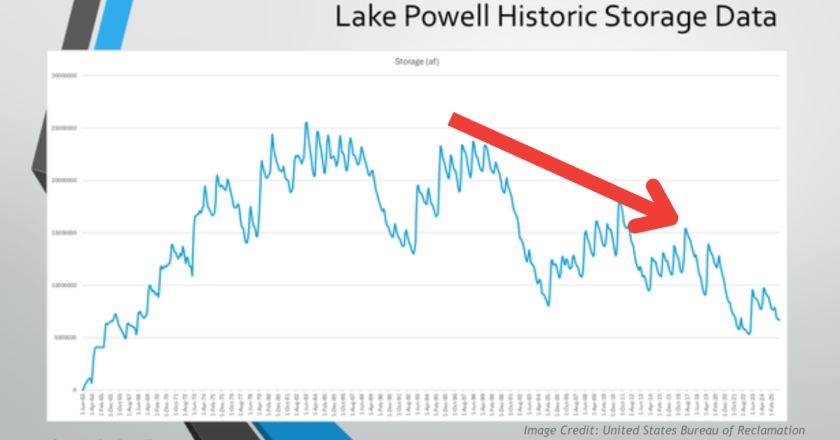
By Alan Gionet | CBS Colorado A new report compiled by the University of Colorado's Colorado River Research Group warns that threats to the river's water supply are now so severe that they pose a significant risk to the water supply in seven Western states and tribal areas, potentially impacting the economy and governance. The report is titled "Colorado River Insights 2025: Dancing with Deadpool." It is a compilation of reports by a variety of experts looking at different aspects of high demand and supply shortages that have led to low water levels in places like Lake Powell and Lake Mead. These issues threaten both power generation and supply. "What's missing is urgency. The window for decisive, collaborative action is closing fast," said Douglas Kenney, director...
Colorado Does Not Need More Candidates. Colorado Needs a Future.
Rocky Mountain Voice, Commentary, State, Top Stories

Colorado Does Not Need More Candidates. Colorado Needs a Future.

By Sean M. Pond | Guest Commentary, Rocky Mountain Voice Colorado is at a crossroads, and everyone living here can feel it. The cost of living has exploded. Families are working harder than ever yet falling further behind. Housing has slipped out of reach. Power bills climb. Groceries drain budgets. Fuel prices punish long commutes. Child care costs rival mortgages. Communities wonder how long they can stay in the state they love. All the while, the people in charge talk about saving the world while ignoring the people who actually live here, in Colorado.  We hear speeches about climate and national image. We hear big promises about transformation. We hear talking points that sound polished but solve nothing. What we do not hear is practical leadership. What we do...
Lower Arkansas Valley Farmers Sound Alarm Over Urban Water Demand
KRDO.COM, Approved, Local

Lower Arkansas Valley Farmers Sound Alarm Over Urban Water Demand

By Bart Bedsole | KRDO OTERO COUNTY, Colo. (KRDO) - There is a battle going on right now across the west between cities and farming communities... over water.  Southeastern Colorado has become a target lately of large thirsty cities, but now many of the folks who live there are voicing concerns about not only the future of their farms but the future of America’s food supply.  The Hanagan family in Otero County is among them.  Kim runs the family’s market along Highway 50 most of the time, where her sons frequently arrive with new shipments, while Eric Hanagan manages the farm a few miles south of Swink. He is the fifth generation in his family to farm their land, which now includes about a thousand acres. "We were founded about 1909," he says, “It...
Seven States Fail to Agree on Colorado River Plan Before Key Deadline
CBS Colorado, Approved, State

Seven States Fail to Agree on Colorado River Plan Before Key Deadline

By: Dillon Thomas | CBS Colorado The future of the Colorado River, and its use by seven states that rely on it, is still up in the air after negotiators failed to meet a deadline set by the federal government. The Upper Basin and Lower Basin states were asked to have a plan set for the future of the river by Tuesday night, as the current plans are set to expire by the end of 2026. The river is heavily utilized by the Lower Basin states, which make up Arizona, California and Nevada. Otherwise largely deserts, the Colorado River allows for both communities and agriculture to thrive in those states. The Upper Basin, consisting of Colorado, Utah and New Mexico, comparatively rely less heavily on the Colorado River even as populations continue to rise in those states. "We made an ag...
Colorado River reality check: The problem isn’t the compact, it’s overuse.
Rocky Mountain Voice, Commentary, State, Top Stories

Colorado River reality check: The problem isn’t the compact, it’s overuse.

By Steve Harris | Guest Commentary, Rocky Mountain Voice This is my final article on the centennial of the Colorado River Compact (CRC) and the 75th anniversary of the Upper Colorado River Compact (UCRC), collectively referred to as the ‘Compacts.’” In water time, the Compacts are not that old. I have been in the water business in the Colorado River basin for 50 years – half of the CRC’s life – and watched how people viewed the implications of the Compacts over time. The Compacts have gone from background documents to front and center of water discussions. Lake Mead Fall 2022, Photo Credit: John Norton There has been a lot of hand-wringing in the media and some groups about the CRC being based on 15 million acre-feet (MAF), even though at the time there was an assumed aver...
The Upper Basin Compact in a nutshell
Rocky Mountain Voice, Commentary, State, Top Stories

The Upper Basin Compact in a nutshell

By Steve Harris | Guest Commentary, Rocky Mountain Voice Editor’s note: This is Part 5 of 6 in the Water Time Reflections series by Steve Harris, marking 100 years since the Colorado River Compact. In this installment, Harris examines the 1948 Upper Colorado River Basin Compact—how it divided water among the Upper Basin states, shaped drought management, and continues to guide allocations today. For those of us in the Upper Colorado River Basin, we have the Upper Colorado River Basin Compact (UBC) that was negotiated from 1946 to 1948, and was ratified in 1948 (a copy is available by clicking here). The UBC is as important to the Upper Basin States as the Colorado River Compact (CRC) is for the entire basin because it allocates water to each state including during shortages. Though n...
How Did Compact Negotiators Split the Colorado River’s Flow in 1922?
Rocky Mountain Voice, Commentary, State, Top Stories

How Did Compact Negotiators Split the Colorado River’s Flow in 1922?

By Steve Harris | Guest Commentary, Rocky Mountain Voice For my third installment in our discussion of the 100-year anniversary of the Colorado River Compact in 1922, I’ll describe how the states negotiated their respective share of the annual flow of the Colorado River. Though I was not in attendance in 1922, the minutes of the negotiations are very thorough. A few definitions before we start: “WY” is short for the federal water year from October 1st to September 30th. Colorado water years are November to October. AF is acre-feet or 325,851 gallons or 43,560 cubic feet. MAF is million acre-feet. Actual Colorado River flows in 1922: At the first Colorado River Compact Commission (CRCC) meeting on January 30, 1922, data on the flow of the Colorado River at various l...
Feds Need Different Approach to Colorado River
GregWalcher.com, Approved, Commentary, State

Feds Need Different Approach to Colorado River

By Greg Walcher | Commentary, GregWalcher.com This month’s withdrawal of President Trump’s nominee to head the Bureau of Reclamation (BOR) provides an opportunity, not just for a new nominee but for a new approach to the whole Colorado River management mess. It is an opportunity the White House and Interior Secretary Doug Burgum should take very seriously. The nominee’s withdrawal, due to the skepticism of Upper Basin senators, highlighted the deteriorating relationship between BOR and the states. In fact, BOR under Trump has thus far taken essentially the same tack as under Presidents Obama and Biden, namely threatening the states – including those in the Upper Basin – with a federal takeover if they don’t produce an “acceptable” plan to reduce their use of water. As negotiations...
When did the Upper and Lower Basin of the Colorado River become a thing?
Rocky Mountain Voice, Commentary, State, Top Stories

When did the Upper and Lower Basin of the Colorado River become a thing?

By Steve Harris | Guest Commentary, Rocky Mountain Voice And other insights from the 1922 Colorado River Compact negotiations Though I was not in attendance in 1922 (don’t laugh), the minutes of the negotiations are very thorough. At the first Commission meeting starting on January 30, 1922, the negotiations were centered on separating the Colorado River flow by the potential for irrigated lands in each state. Reclamation—only about 20 years old at the time—had made surveys of the potential irrigated lands in each state. The acreages are listed in the minutes of the first meeting. Miss the first piece? Read: “Harris Water Time” and the Colorado River Compact’s century of lessons Colorado River Commission delegates meet in Santa Fe, New Mexico, in 1922. Secretary of Commerce...

FD863768-0ACF-495E-9D21-2EF784DFFA6B[1]

Join us at RMV's Freedom Festival

Click Here for Tickets!

This will close in 0 seconds