Rocky Mountain Voice

Tag: Water rights

Victor Marx Calls for Water Storage Expansion and Modern Infrastructure
The Denver Gazette, Approved, State

Victor Marx Calls for Water Storage Expansion and Modern Infrastructure

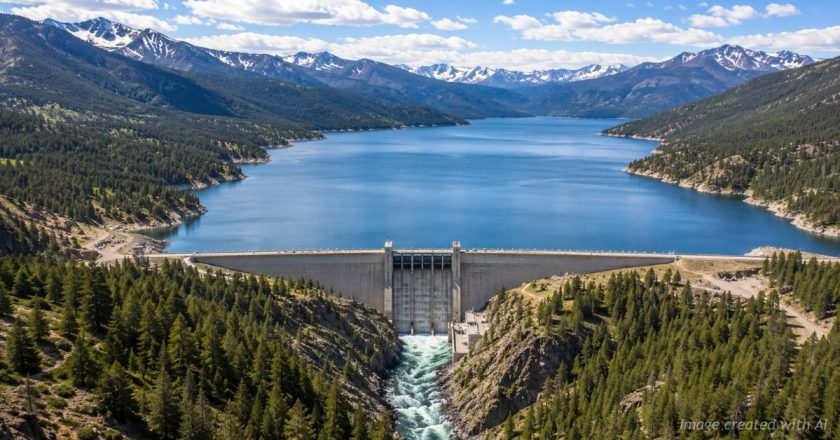
By Marianne Goodland | The Denver Gazette Victor Marx, the Republican nominee for governor, took the spotlight Wednesday during the opening day of the Colorado Water Congress, laying out how he says the state should approach its water future. Marx told the standing-room-only audience in Steamboat Springs that he holds water rights himself, giving him a personal stake in Colorado’s water challenges. His proposed fix? More storage. “We can’t make it snow, we can’t make it rain, but we can decide whether we’re prepared for when the water comes,” he said. “So, I believe we should store water in good years. Wet years. Lord, please send it.” He said storage gives farmers and ranchers reliability, options for communities and reduces emergency decisions. “...
Lake Mead And Lake Powell Hit Historic Lows As Colorado River Crisis Deepens
The Denver Gazette, Approved, State

Lake Mead And Lake Powell Hit Historic Lows As Colorado River Crisis Deepens

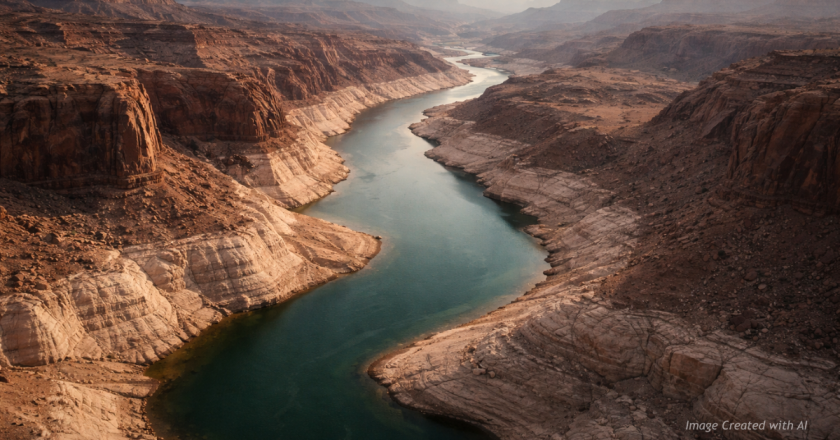
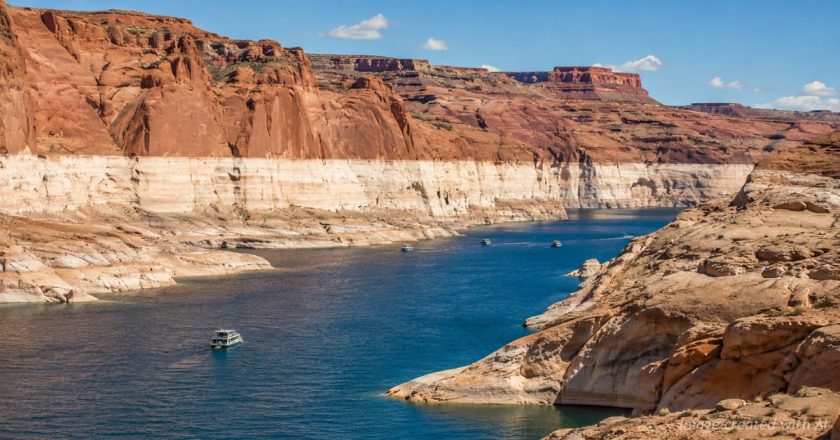
By Marianne Goodland | The Denver Gazette In the past 10 days, both Lake Mead on the Arizona-Nevada border and Lake Powell roughly 300 miles northeast on the Utah-Arizona line have recorded their lowest water levels since the reservoirs were first filled. Lake Mead, the nation’s largest reservoir and which supplies water to Nevada, Arizona and California, measured 1,040.4 feet above sea level on Aug. 7. The level has continued to drop since then. On Monday, the reservoir measured 1,039.83 feet above sea level, nearly 190 feet below full and down about 2 feet over the past 30 days. A year ago, Lake Mead stood at roughly 1,054 feet. Hoover Dam, which created Lake Mead, was built in 1935. The reservoir was last at full in 1983. If the reservoir loses an...
When Colorado’s water runs short what should come first: Food or fairways?
GregWalcher.com, Approved, Commentary, State

When Colorado’s water runs short what should come first: Food or fairways?

By Greg Walcher | Commentary, GregWalcher.com I met a guy at a golf course recently who expressed grave concern about the health of the grass this summer, because of Colorado’s ongoing drought. We hadn’t met before and knew nothing of each other’s backgrounds. But he entertained me with a tirade about Colorado’s waste of water, especially for agriculture. He asserted that 85 percent of Colorado’s precious water is used to raise livestock and feed for livestock, an outrage when there is so little for watering the greens and fairways. I was tempted to ask the man if he is a vegetarian, but I didn’t because I already knew the answer. Of course he is not a vegetarian; he is one of those activists who wants everyone else to change their lifestyles. The kind who want everyone else to r...
Colorado Faces Supreme Court Fight Over South Platte Water Rights
The Colorado Sun, Approved, State

Colorado Faces Supreme Court Fight Over South Platte Water Rights

By: Jeff Rice | The Colorado Sun Attorney General Phil Weiser is ready for the fight over water flowing across the border: “Nebraska’s burden to prove claims is incredibly high.” The U.S. Supreme Court has agreed to hear Nebraska’s lawsuit against Colorado over a proposed canal that would take water out of the South Platte River in Colorado and send it to a reservoir in Nebraska. Nebraska claims Colorado is deliberately obstructing efforts to build the ditch, known as the Perkins Canal, even though everyone agrees Nebraska has the right to do so. The canal is necessary, Nebraska says, because Colorado isn’t sending enough water into Nebraska. The Perkins Canal would divert water from the South Platte River near Ovid to a storage site somewhere in Nebraska. The...
Before blaming alfalfa for Colorado’s water woes, consider what the headlines leave out
Colorado Accountability Project, Approved, Commentary, State

Before blaming alfalfa for Colorado’s water woes, consider what the headlines leave out

By Cory Gaines | Commentary, Colorado Accountability Project Alfalfa and water use: comparing apples to oranges There is a media narrative out there about alfalfa which, though not entirely wrong, is desperately in need of context; this being another example of why reporters parachuting into rural areas of the state to report on things prior to running back to the Front Range is doing no one any good (rural or urban). The claim was recently repeated in a Sun article, along with its natural follow-on. Quoting from the first link below: “It takes 44 inches of water a year in Burlington to grow alfalfa. Only about 10 inches of water drops on Burlington in a year. It only takes 15 inches of water to grow a healthy crop of black-eyed peas in Burlington. So. The numbers ...
Trump Administration Releases Key Funds For Colorado River Water Project
Approved, State, The Denver Gazette

Trump Administration Releases Key Funds For Colorado River Water Project

By Marianne Goodland | The Denver Gazette The Trump administration on Friday released $40 million, clearing the way for a water district and its partners to finish funding the purchase of some of the state’s most senior Colorado River water rights, Gov. Jared Polis announced. Federal funding for the Shoshone water rights owned by Public Service Company, a division of Xcel Energy, was approved by the Biden administration in 2024 through the Inflation Reduction Act. An executive order issued shortly after President Donald Trump took office in January 2025 put that funding on hold. With the $40 million in federal funding on its way, the project’s funding now stands at $97 million, close enough to its $99 million total cost that the Colorado River Conservation District can move int...
Coastal desalination could save Colorado’s water. The pushback? Cost
Rocky Mountain Voice, Commentary, State, Top Stories

Coastal desalination could save Colorado’s water. The pushback? Cost

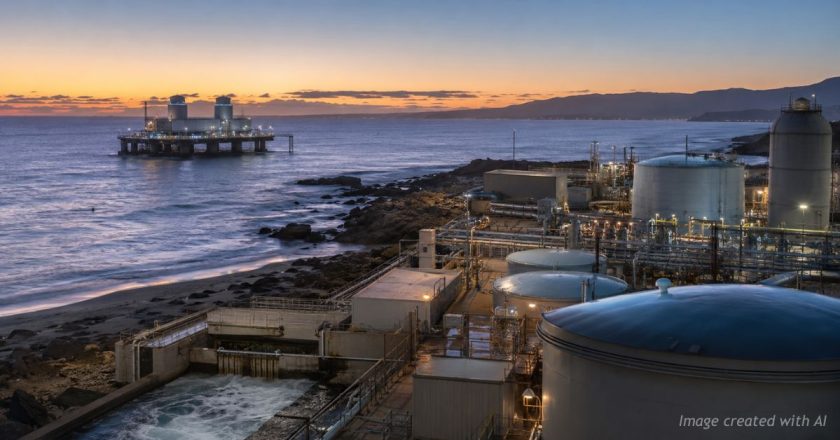
By Michael J Badagliacco, “MJB” | Guest Commentary, Rocky Mountain Voice Colorado’s water rights must never become a bargaining chip.  The 1922 Colorado River Compact apportioned 7.5 million acre-feet annually to the Upper Basin, including Colorado, and the same amount to the Lower Basin states. The 1928 Boulder Canyon Project Act fixed specific Lower Basin shares: California 4.4 million acre-feet, Arizona 2.8 million acre-feet, and Nevada 0.3 million acre-feet. The 1948 Upper Colorado River Basin Compact later assigned Colorado roughly 51.75% of the Upper Basin’s share, or about 3.86 million acre-feet. The 1964 Arizona v. California Supreme Court decree confirmed federal oversight of these mainstream allocations while highlighting the need for supply solutions beyond repeate...
CMU student leaders press governor hopefuls on taxes, energy and rural control
Rocky Mountain Voice, State, Top Stories

CMU student leaders press governor hopefuls on taxes, energy and rural control

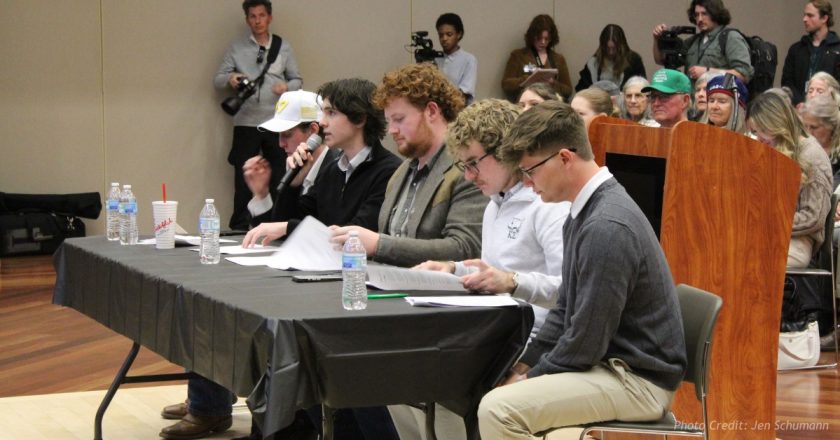
By Jen Schumann | Rocky Mountain Voice TPUSA chapter leaders from Colorado Mesa University opened Monday night’s gubernatorial forum with a question more typical of a legislative hearing than a campaign rally. Instead of easing into the forum, they went straight to TABOR. “How would you approach balancing Colorado’s budget while complying with TABOR? And what are your priorities when it comes to taxes, refunds and state spending during periods of surplus and economic stagnation?” Six candidates were at the forum that evening. Sen. Barbara Kirkmeyer told the crowd she almost didn’t make the trip, saying she rearranged her Joint Budget Committee schedule and decided to “head on over to Grand Junction” when the weather held. Rep. Scott Bottoms of Colorado Springs share...
Feds Unveil Colorado River Options as States Miss Agreement Deadline
Colorado Politics, Approved, State

Feds Unveil Colorado River Options as States Miss Agreement Deadline

By Marianne Goodland | Colorado Politics Two months after the seven states of the Colorado River basin failed to reach consensus on managing the waterway, the U.S. Bureau of Reclamation issued a set of proposed alternatives. The alternatives are familiar concepts, including “no action” — an unlikely scenario — and certain levels of coordination, including voluntary measures, among the states. One option is driven by the historical, natural flow at one of the reservoirs. Current operating guidelines for the river that supplies water to seven states, 40 million people, 30 tribes and 5.5 million acres of agricultural land will expire at the end of 2026.  On Jan. 9, the Bureau issued a draft Environmental Impact Statement that evaluates five operational alterna...
Feds own the dams, but who owns the water?
Rocky Mountain Voice, Approved, Commentary, National

Feds own the dams, but who owns the water?

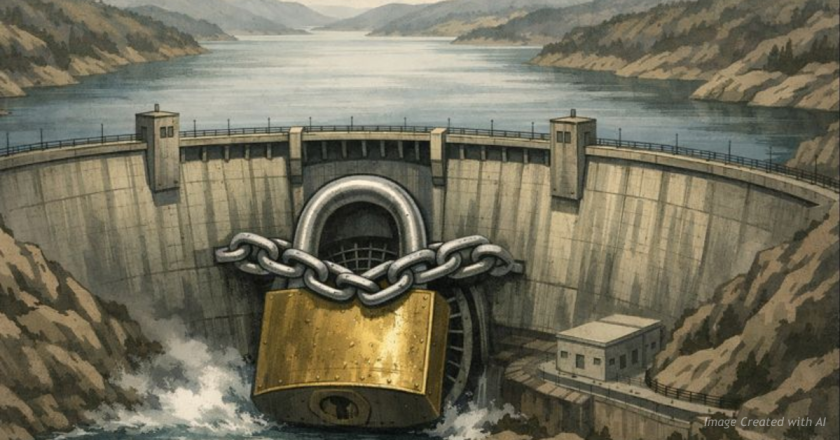
By Greg Walcher | Commentary, GregWalcher.com A couple years ago, I criticized the Bureau of Reclamation for draining Blue Mesa Reservoir without bothering to tell the people in Gunnison whose livelihood is affected. I got a little push-back for saying that while the Bureau owned the dam, it did not own the water. A close friend and water lawyer told me to be careful, that the Bureau does in fact own some water rights in the Gunnison River. I admit the legal nuance but still insist it is a debatable point. That’s because Congress never funded such water projects for the purpose of the federal government owning and controlling the West’s water. The Colorado River Storage Project Act of 1956 led to construction of Glen Canyon, Flaming Gorge, and Navajo Dams, as well as ...