Rocky Mountain Voice

Tag: Western Water

Is Colorado’s “final” Colorado River plan really final?
GregWalcher.com, Approved, Commentary, National

Is Colorado’s “final” Colorado River plan really final?

By Greg Walcher | Commentary, GregWalcher.com I heard about two lawyers that argued for over an hour. Finally, one said, “That’s my final word on the subject.” To which the other replied, “Oh, good. Now we can begin.” In politics, contentious agreements are a bit like that, too. There is really no such thing as a “final” agreement, only the agreement that’s in effect until the next meeting. The Bureau of Reclamation just released its “Final Environmental Impact Statement for the Post-2026 Operational Guidelines and Strategies for Lake Powell and Lake Mead.” It represents the government’s “final decision” on how it will manage the Colorado River over the next ten years. The first draft of the document was published in January, followed by months of public comments and meetings, an...
Lake Mead And Lake Powell Hit Historic Lows As Colorado River Crisis Deepens
The Denver Gazette, Approved, State

Lake Mead And Lake Powell Hit Historic Lows As Colorado River Crisis Deepens

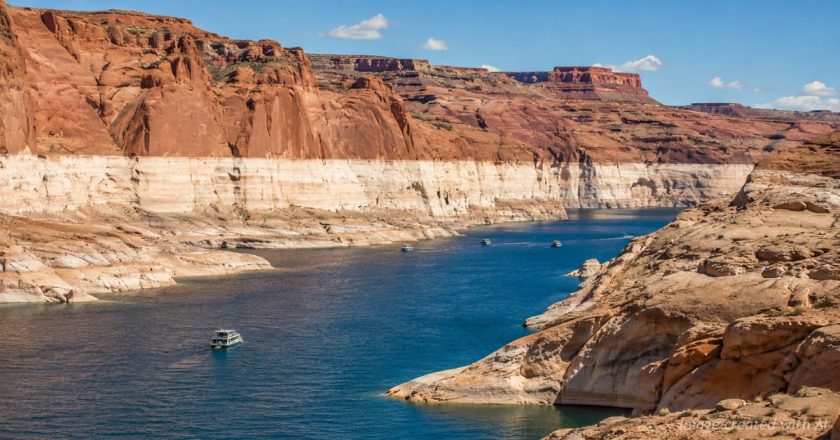
By Marianne Goodland | The Denver Gazette In the past 10 days, both Lake Mead on the Arizona-Nevada border and Lake Powell roughly 300 miles northeast on the Utah-Arizona line have recorded their lowest water levels since the reservoirs were first filled. Lake Mead, the nation’s largest reservoir and which supplies water to Nevada, Arizona and California, measured 1,040.4 feet above sea level on Aug. 7. The level has continued to drop since then. On Monday, the reservoir measured 1,039.83 feet above sea level, nearly 190 feet below full and down about 2 feet over the past 30 days. A year ago, Lake Mead stood at roughly 1,054 feet. Hoover Dam, which created Lake Mead, was built in 1935. The reservoir was last at full in 1983. If the reservoir loses an...
California’s water answer may be hiding in plain sight: The Pacific Ocean
GregWalcher.com, Approved, Commentary, National

California’s water answer may be hiding in plain sight: The Pacific Ocean

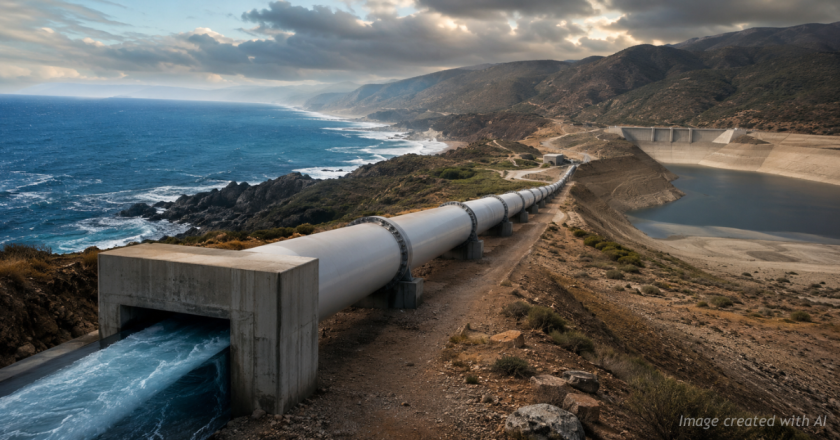
By Greg Walcher | Commentary, GregWalcher.com The Wall Street Journal headline said “San Diego Now Has So Much Water That It’s Selling It.” The article said San Diego generates enough water to rescue Arizona, though that’s jumping the gun just a bit. No such deal has actually been finalized yet, but the fact that the conversation is underway marks a new era in Colorado River negotiations. And not a minute too soon. The latest optimism is not based on any change in the historically low flow of the Colorado River. It’s based on the realization – at long last – that California does not need Colorado River water. That realization has finally come not only to Upper Basin states like Colorado (which has been making this point for decades) but to all of the seven states in the Colorado Rive...
Feds own the dams, but who owns the water?
Rocky Mountain Voice, Approved, Commentary, National

Feds own the dams, but who owns the water?

By Greg Walcher | Commentary, GregWalcher.com A couple years ago, I criticized the Bureau of Reclamation for draining Blue Mesa Reservoir without bothering to tell the people in Gunnison whose livelihood is affected. I got a little push-back for saying that while the Bureau owned the dam, it did not own the water. A close friend and water lawyer told me to be careful, that the Bureau does in fact own some water rights in the Gunnison River. I admit the legal nuance but still insist it is a debatable point. That’s because Congress never funded such water projects for the purpose of the federal government owning and controlling the West’s water. The Colorado River Storage Project Act of 1956 led to construction of Glen Canyon, Flaming Gorge, and Navajo Dams, as well as ...
The Upper Basin Compact in a nutshell
Rocky Mountain Voice, Commentary, State, Top Stories

The Upper Basin Compact in a nutshell

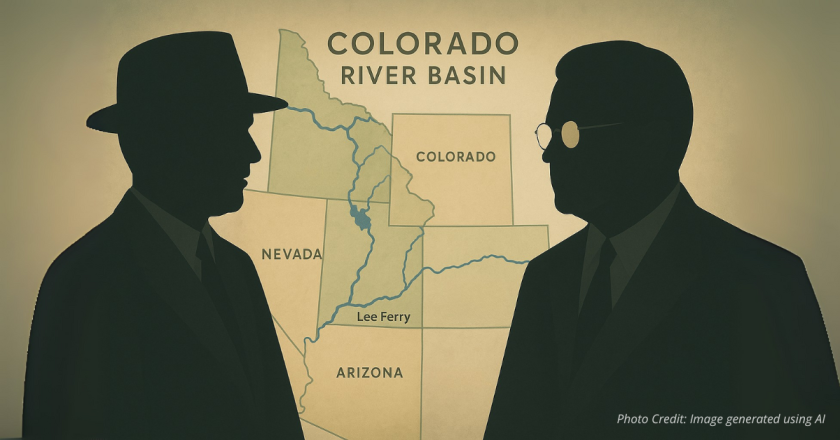
By Steve Harris | Guest Commentary, Rocky Mountain Voice Editor’s note: This is Part 5 of 6 in the Water Time Reflections series by Steve Harris, marking 100 years since the Colorado River Compact. In this installment, Harris examines the 1948 Upper Colorado River Basin Compact—how it divided water among the Upper Basin states, shaped drought management, and continues to guide allocations today. For those of us in the Upper Colorado River Basin, we have the Upper Colorado River Basin Compact (UBC) that was negotiated from 1946 to 1948, and was ratified in 1948 (a copy is available by clicking here). The UBC is as important to the Upper Basin States as the Colorado River Compact (CRC) is for the entire basin because it allocates water to each state including during shortages. Though n...
When did the Upper and Lower Basin of the Colorado River become a thing?
Rocky Mountain Voice, Commentary, State, Top Stories

When did the Upper and Lower Basin of the Colorado River become a thing?

By Steve Harris | Guest Commentary, Rocky Mountain Voice And other insights from the 1922 Colorado River Compact negotiations Though I was not in attendance in 1922 (don’t laugh), the minutes of the negotiations are very thorough. At the first Commission meeting starting on January 30, 1922, the negotiations were centered on separating the Colorado River flow by the potential for irrigated lands in each state. Reclamation—only about 20 years old at the time—had made surveys of the potential irrigated lands in each state. The acreages are listed in the minutes of the first meeting. Miss the first piece? Read: “Harris Water Time” and the Colorado River Compact’s century of lessons Colorado River Commission delegates meet in Santa Fe, New Mexico, in 1922. Secretary of Commerce...