Rocky Mountain Voice

Tag: Agriculture

Colorado, Western States Face Federal Deadline to Avert Colorado River Showdown
The Denver Gazette, Approved, State

Colorado, Western States Face Federal Deadline to Avert Colorado River Showdown

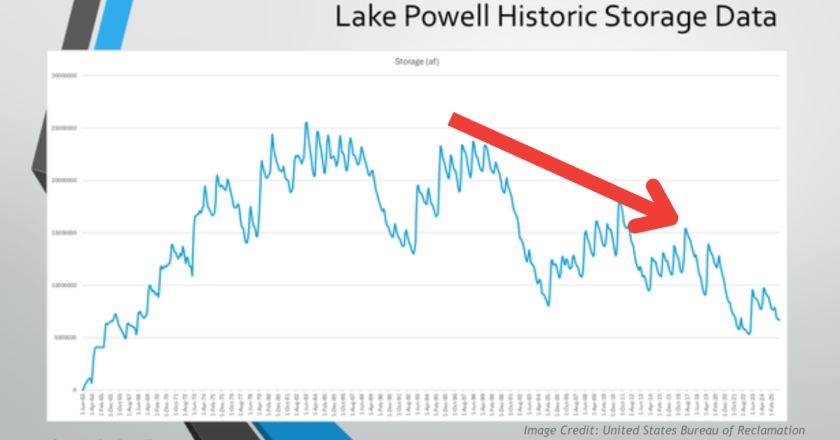
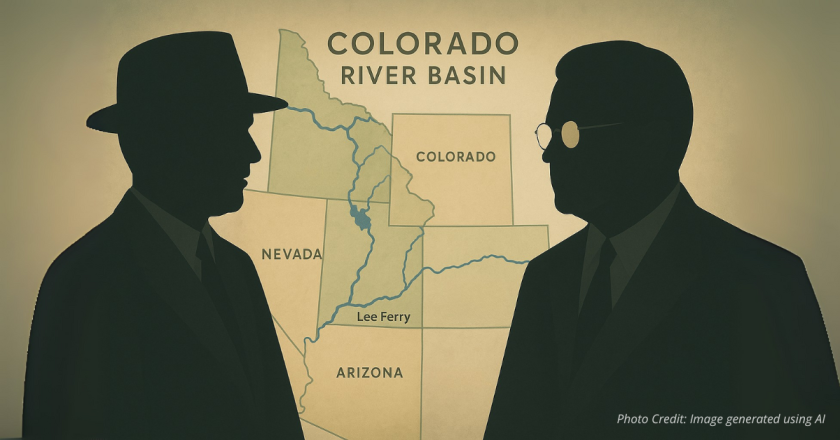
By Marianne Goodland | The Denver Gazette This Tuesday is the deadline set by the U.S. Bureau of Reclamation for the seven states of the Colorado River to develop a framework for an agreement governing the river’s operations. But that agreement seems just as far away now as it did when Scott Cameron, who was named acting head of the Bureau of Reclamation in October, announced the deadline in June. Cameron told the Arizona Reconsultation Committee during its June meeting that Secretary of the Interior Doug Burgum is prepared to act if the seven states failed to come up with the agreement framework by this week’s deadline. “Our goal is to parachute a seven-state deal” into an environmental impact statement the agency is developing and as the preferred alternative in Mar...
Western Water Crisis Deepens as Key Colorado River Decisions Loom
The Fence Post, Approved, State

Western Water Crisis Deepens as Key Colorado River Decisions Loom

By Ali Longwell | The Fence Post Western Slope elected officials, water managers, engineers and conservationists met in Grand Junction on Friday, Oct. 3, all focused on one thing: the uncertain future of the Colorado River. “Water users, as a lot, tend to crave certainty, and that certainty seems more and more elusive these days,” said Peter Fleming, general counsel for the Colorado River District, at this year’s annual seminar hosted by the River District. Andy Mueller, the River District’s general manager, said the Colorado River Basin was “at a crossroads.” While the seminar broached many of the challenges and opportunities facing those who rely on the Colorado River, most discussions came back to two looming decisions that will dictate how the future looks for the 40 millio...
Feds Need Different Approach to Colorado River
GregWalcher.com, Approved, Commentary, State

Feds Need Different Approach to Colorado River

By Greg Walcher | Commentary, GregWalcher.com This month’s withdrawal of President Trump’s nominee to head the Bureau of Reclamation (BOR) provides an opportunity, not just for a new nominee but for a new approach to the whole Colorado River management mess. It is an opportunity the White House and Interior Secretary Doug Burgum should take very seriously. The nominee’s withdrawal, due to the skepticism of Upper Basin senators, highlighted the deteriorating relationship between BOR and the states. In fact, BOR under Trump has thus far taken essentially the same tack as under Presidents Obama and Biden, namely threatening the states – including those in the Upper Basin – with a federal takeover if they don’t produce an “acceptable” plan to reduce their use of water. As negotiations...
When did the Upper and Lower Basin of the Colorado River become a thing?
Rocky Mountain Voice, Commentary, State, Top Stories

When did the Upper and Lower Basin of the Colorado River become a thing?

By Steve Harris | Guest Commentary, Rocky Mountain Voice And other insights from the 1922 Colorado River Compact negotiations Though I was not in attendance in 1922 (don’t laugh), the minutes of the negotiations are very thorough. At the first Commission meeting starting on January 30, 1922, the negotiations were centered on separating the Colorado River flow by the potential for irrigated lands in each state. Reclamation—only about 20 years old at the time—had made surveys of the potential irrigated lands in each state. The acreages are listed in the minutes of the first meeting. Miss the first piece? Read: “Harris Water Time” and the Colorado River Compact’s century of lessons Colorado River Commission delegates meet in Santa Fe, New Mexico, in 1922. Secretary of Commerce...
USDA move to Fort Collins could add 6,000 jobs and $1B in output, study finds
Colorado Politics, Approved, State

USDA move to Fort Collins could add 6,000 jobs and $1B in output, study finds

By Marissa Ventrelli | Colorado Politics The U.S. Department of Agriculture’s planned relocation of up to 2,600 employees to Fort Collins could bring more than $1 billion in new business output and over 6,000 new jobs to the area by the end of next year, according to a study by the think tank Common Sense Institute. In July, Agriculture Secretary Brooke Rollins announced that the department would be relocating up to 2,600 personnel and operations to five new hubs, including Fort Collins. According to CSI study authors Dr. Caitlin McKennie and Cooper Pollard, the move is expected to “stimulate job creation, bolster local businesses, and enhance collaboration with Colorado State University,” which ranks 23rd in the nation for agricultural sciences. Agriculture plays a “vital role...
The push to redefine beneficial use ignores 100 years of western water law
GregWalcher.com, Approved, Commentary, State

The push to redefine beneficial use ignores 100 years of western water law

By Greg Walcher | Commentary, GregWalcher.com Last week when some marauding teens bashed a mailbox with a bat, angry neighbors posted on nextdoor.com, “there needs to be a law against that.” Is that just an impulse reaction, or do they really not know there is a law against that. Since 1909, it has been a federal offense to tamper with, vandalize, deface, or destroy mailboxes, under penalty of three years in prison and a $250,000 fine. People often think things ought to be illegal that already are, that we should regulate things we already do, even that things ought to be defined that already are. I couldn’t help wondering how serious recent headlines were, announcing that several environmental industry groups had petitioned the Bureau of Reclamation to stop allowing water to be wast...
Colorado River faces new threat as zebra mussels take hold
Fox31, Approved, State

Colorado River faces new threat as zebra mussels take hold

By: Spencer Kristensen | FOX31 KDVR DENVER (KDVR) — Colorado Parks and Wildlife officially declared a portion of the Colorado River as “infested” with invasive zebra mussels after sampling detected adult zebra mussels in the river and another nearby lake in Grand Junction, CPW announced in a press release on Monday afternoon. “While this is news we never wanted to hear, we knew this was a possibility since we began finding veligers in the river,” said CPW Director Jeff Davis in the press release. “I can’t reiterate this enough. It was because we have a group of individuals dedicated to protecting Colorado’s water resources that these detections were made.” On Aug. 28, the Aquatic Animal Health Lab suspected veligers, the microscopic larval stage of zebra mussels, were collected fr...
Religious Freedom and Property Rights Collide in Teller County over “Illegal” Greenhouse
The Colorado Sun, Approved, Local

Religious Freedom and Property Rights Collide in Teller County over “Illegal” Greenhouse

By Jennifer Brown | The Colorado Sun A court battle over the greenhouse hinges on religious freedom, conflict of interest and the state Farm Stand Act. A battle between a Divide couple who built a greenhouse next to their home and Teller County commissioners who want them to tear it down has moved to the courthouse. Commissioners have sued Virginia and Zac Loop, seeking a judge’s order to force the couple to dismantle the 2,856-square-foot rectangular greenhouse where they had planned to harvest mangoes, avocados and other fruits and vegetables that don’t grow at 9,200 feet. The county is seeking $2,000 in initial fees plus $200 per day for every day the greenhouse has stayed up since the Teller County Community Development Department ordered the Loops to take it down. So fa...
State school trust lands were meant to fund education, not environmental agendas
GregWalcher.com, Approved, Commentary, State

State school trust lands were meant to fund education, not environmental agendas

By Greg Walcher | GregWalcher.com A land ownership checkerboard exists in nearly every state because of an oddity called “state school trust lands.” The federal government granted those lands at the time of statehood, under the Land Ordinance of 1785. Thomas Jefferson’s system divides and records land into townships, each with 36 one-square-mile sections. New states entering the union were each given 2 sections per township, to be held in trust to fund public schools. State Land Boards were created to manage those lands – in my state of Colorado it’s 4 million acres. The Board was charged with administering the lands “in such a manner as will secure the maximum possible amount” for the school fund. The Lincoln Institute of Public Lands explains, “That singularity of purpose continues...
Shoshone Water Rights Could Bolster Fish, Wildlife and Recreation on Colorado River
State, Approved, The Colorado Sun

Shoshone Water Rights Could Bolster Fish, Wildlife and Recreation on Colorado River

By Shannon Mullane | The Colorado Sun Allowing the state to use Shoshone’s water rights to help the environment could save fish and improve the aquatic environment, according to state studies. Colorado water officials will gather in Durango this week to decide whether a pair of powerful Colorado River rights can be used to benefit the environment.  The Colorado River District, supported by a broad Western Slope coalition, has entered into a $99 million agreement with Xcel Energy to buy two key water rights tied to Shoshone Power Plant, located on the Colorado River near Glenwood Springs. Part of the deal is to add a newly approved use to the existing water rights: keeping water in the river to help the aquatic ecosystem.  That environmental use, called an in-stream flow ri...